Precision Biometric & Connected Hardware For Yokohama Importers
Engineered at our Songshan Lake facility with multi-wavelength photoplethysmography (PPG), micro-airbag oscillometric sensors, and ultra-low power RTOS firmware optimized for Japanese operational standards.
1. The Yokohama & Greater Tokyo Smart Wearable Ecosystem: Strategic Sourcing Landscape
As Japan's second-largest municipal economy and the critical maritime gateway of the Keihin Industrial Zone, the Yokohama market represents a distinctive confluence of industrial precision, advanced geriatric care, and stringent consumer electronic standards. Unlike consumer-centric distribution hubs in western Japan, commercial procurement for heart rate bracelets, biometric fitness trackers, and industrial-grade health bands in Yokohama is driven by institutional demand, enterprise wellness initiatives, and specialized port-logistics labor safety.
Japanese procurement teams, medical distributors, and private-label system integrators in Kanagawa Prefecture operate under rigorous parameters. Wearable heart rate bracelets sourced for the domestic market are not merely evaluated on bill-of-materials (BOM) cost; they are scrutinized for raw data reliability, photoplethysmography (PPG) optical sensor signal-to-noise ratio (SNR), algorithmic motion-artifact filtering, and strict adherence to the Japanese Ministry of Internal Affairs and Communications (MIC) Radio Law (TELEC certification) as well as the Electrical Appliance and Material Safety Act (PSE compliance).
For brands and B2B buyers seeking dependable heart rate bracelet factories & factory in the Yokohama market, the prevailing supply chain model leverages direct ODM/OEM engineering partnerships with high-density production clusters—specifically Dongguan Brainox Technology Co., Ltd. located within Songshan Lake Park, Guangdong. By coupling Southern China's unmatched hardware acceleration with specialized firmware tuning adapted for the Japanese market, Yokohama enterprises achieve competitive margins without compromising on longevity, material biosecurity, or regulatory compliance.
2. High-Yield Localized Application Scenarios Across Yokohama & Kanagawa Prefecture
Understanding user intent and operational utility within the Kanagawa geographic corridor requires segmenting wearable heart rate bracelets into specific commercial scenarios. Our engineering team designs firmware stacks and sensor enclosures tailored to the following localized environments:
Yokohama Port Maritime & Logistics Safety
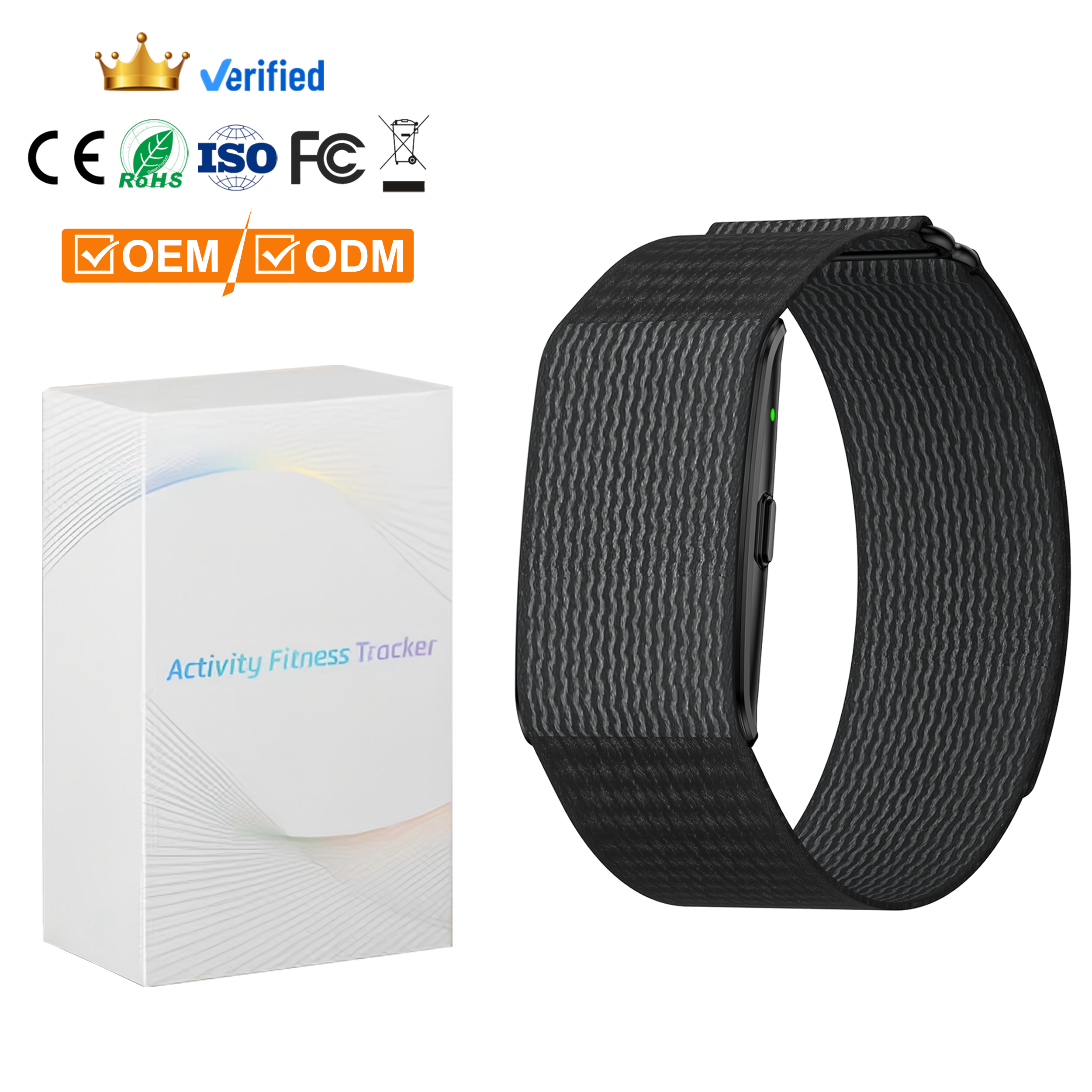
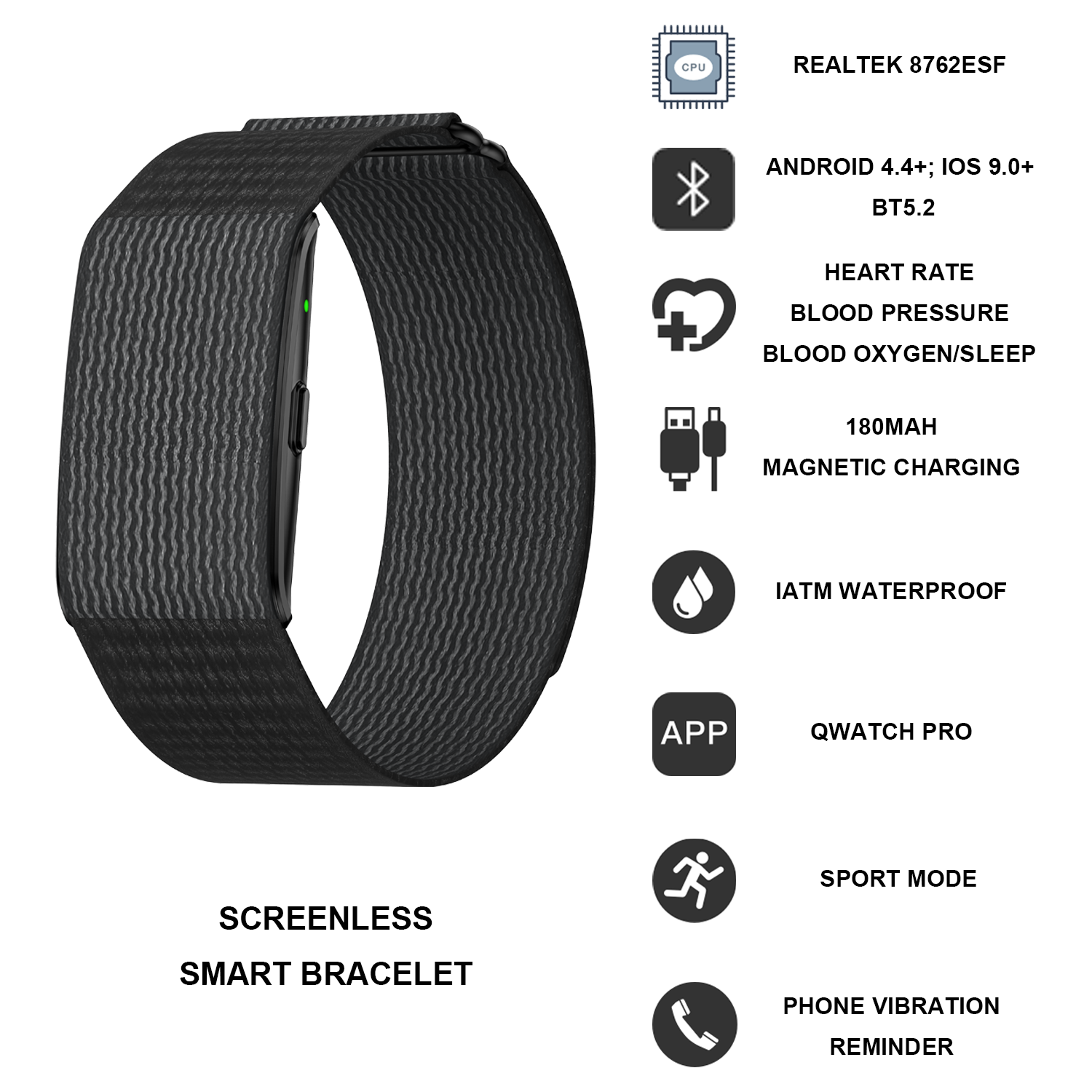
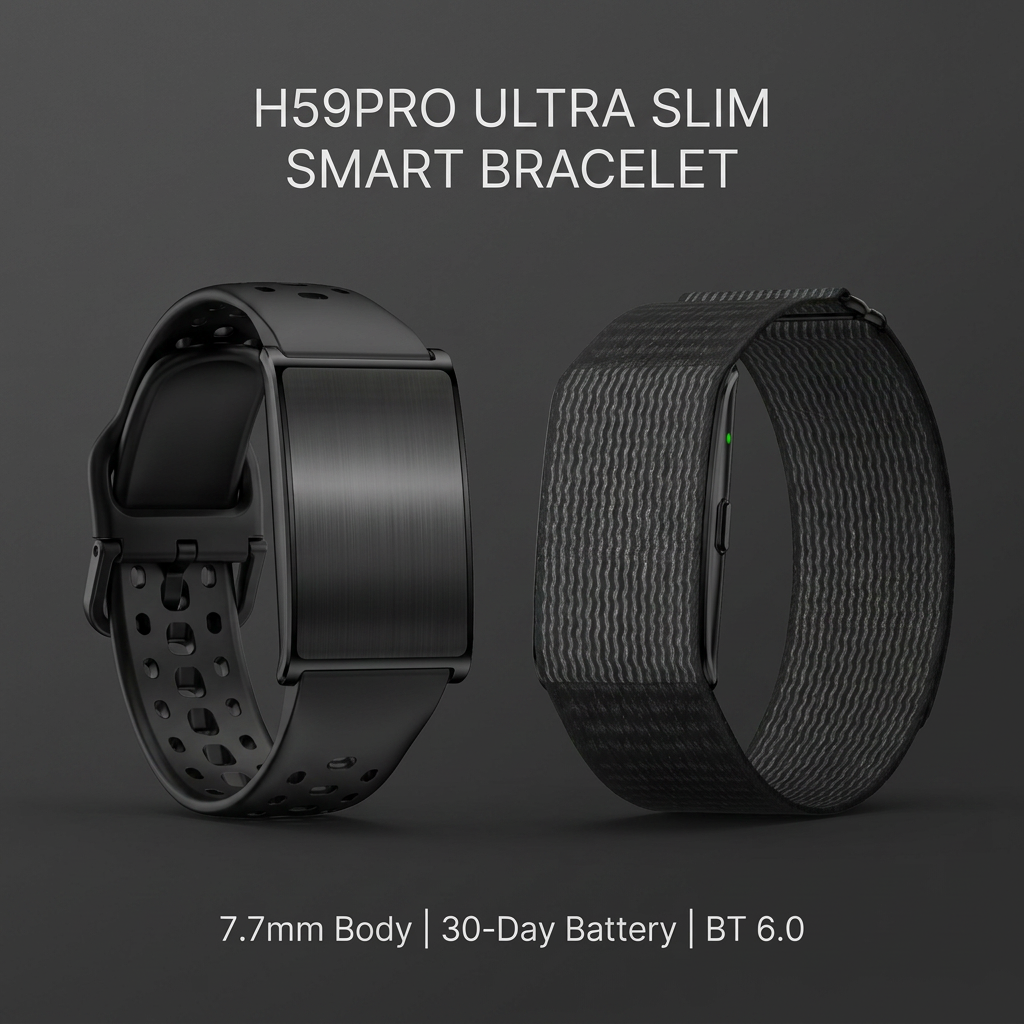
The Port of Yokohama handles over 2.7 million TEU annually. Crane operators, container terminal drayage drivers, and cold-chain warehouse staff operate in high-risk physical conditions. Screenless heart rate bands such as the H59Pro and H59MAX are deployed to monitor core cardiac stress, pulse arrhythmia, and heat-exhaustion biomarkers without presenting screen distraction risks during heavy machinery operation.
Kanagawa ME-BYO Preventive Healthcare
Kanagawa Prefectural Government champions the concept of "ME-BYO" (未病)—managing health status before clinical illness occurs. Our ECG and PPG wristbands, paired with customized Japanese iOS/Android companion software, serve municipal pilot programs across Naka-ku, Kohoku-ku, and Minato Mirai 21, capturing longitudinal heart rate variability (HRV), resting pulse, and peripheral blood oxygen trends for early interventions.
Enterprise "Kenko Keiei" Programs
Under Japan's Ministry of Economy, Trade and Industry (METI) Health & Productivity Management framework (健康経営), corporate employers throughout Yokohama's tech corridors sponsor continuous activity and sleep/stress tracking. Screenless bracelets provide seamless 30 to 50 days of continuous monitoring between recharges, maximizing participant compliance and retention.
3. Yokohama Market Development Trends: Biometric Wearable Evolution (2025–2028)
As the smart wearable landscape transitions into second- and third-generation biometric platforms, purchasers in the Yokohama trading market are prioritizing several engineering shifts:
- Screenless & Distraction-Free Form Factors: Consumer preference in Japan is rapidly bifurcating. While high-end AMOLED smartwatches dominate retail fashion, healthcare programs, subscription telehealth services, and corporate welfare initiatives increasingly favor minimalistic, screenless silicone/nylon wristbands. These form factors prevent notification fatigue, eliminate blue light disruption before sleep, and preserve battery life for up to 50 days.
- Multi-Spectral Optical Sensing & Algorithmic Accuracy: Standard single-wavelength green LEDs are being superseded by dual- and quad-diode configurations utilizing green (525nm) for superficial capillary pulse detection, combined with infrared (940nm) and red (660nm) optical paths for deeper tissue perfusion and arterial oxygen saturation (SpO2) computation under varying skin undertones and ambient temperatures.
- Edge-AI Microcontrollers for On-Device Anomaly Flagging: Rather than offloading uncompressed raw PPG photodiode voltages across Bluetooth Low Energy (BLE), current firmware utilizes ultra-efficient ARM Cortex-M4/M33 architectures capable of running on-chip peak-to-peak interval (PPI) analysis, autonomous arrhythmia screening, and immediate haptic vibration alerts upon detecting acute tachycardia or bradycardia events.
- Decarbonization & Clean Supply Chain Alignment: Japanese enterprises enforce stringent corporate social responsibility (CSR) guidelines. Sourcing requirements stipulate full conformity with RoHS directive 2011/65/EU and its amendment (EU) 2015/863, REACH Regulation (EC 1907/2006) for skin-contact silicone/elastomers, and verifiable recycling protocols for integrated lithium-polymer batteries.
4. Comparative Architecture: Biometric Sensor Stacks & Procurement Selection
Selecting the optimal product category from an overseas manufacturing partner requires balancing sensor fidelity, battery longevity, and commercial price positioning. The matrix below delineates the primary hardware platforms supplied to Yokohama institutional buyers:
| Platform Category | Sensor Configuration | Battery Cycle Life | Target Yokohama Deployment | Factory Customization Depth |
|---|---|---|---|---|
| Screenless Health Band (e.g., H59Pro / H59MAX) |
Continuous PPG (Dual Green + IR), 3-Axis Precision Accelerometer, Micro-Capacitive Sensor | 180mAh–260mAh Li-Po 30 to 50 Days Standby |
Elderly day-care centers, remote nursing facilities, port dockworker safety systems | Laser logo engraving, woven nylon strap customization, custom SDK/API data bridge, gift packaging |
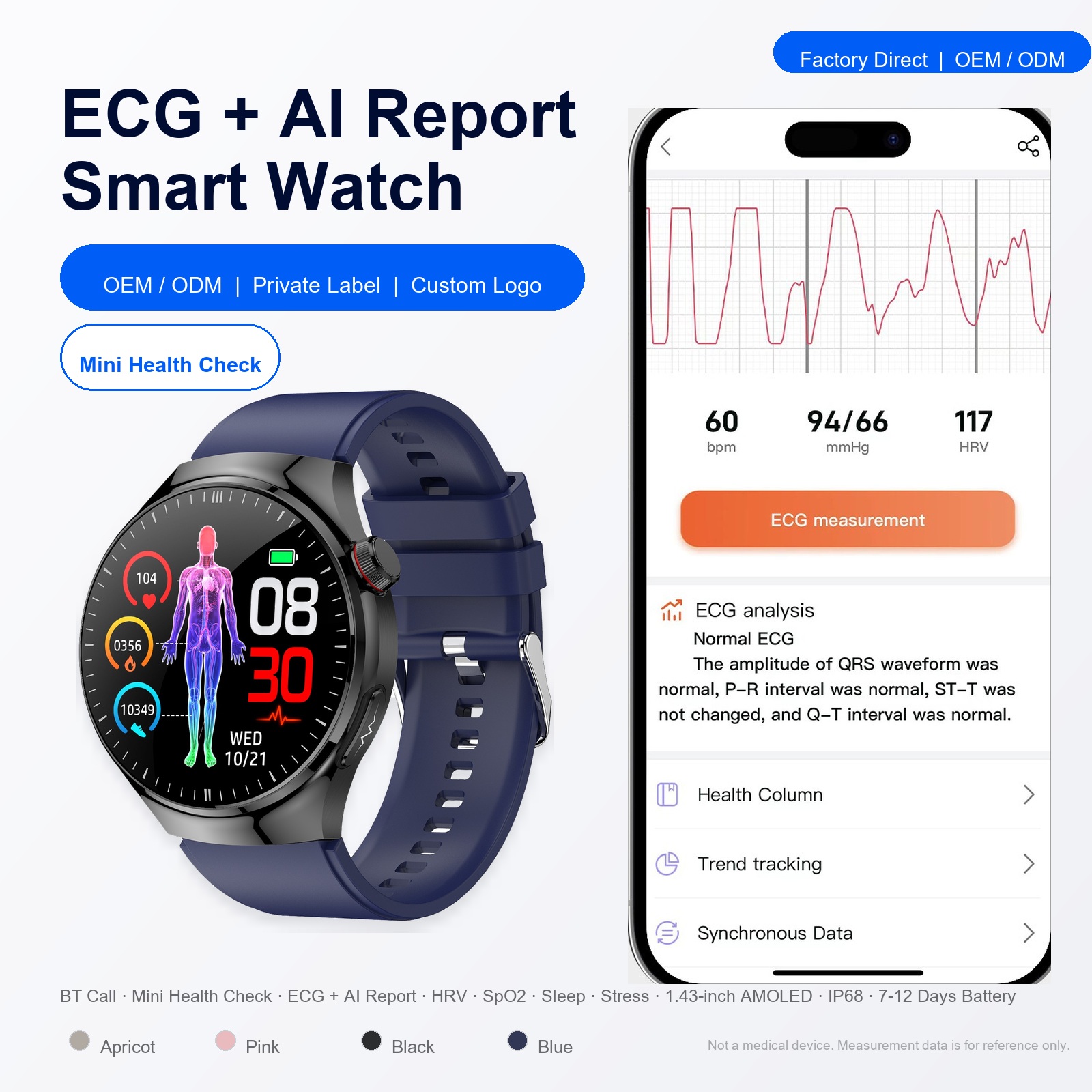
| ECG + HRV AMOLED Watch (e.g., TK26P / TK26) |
Single-Lead Ti ECG Chip + Dual PPG Array + NTC Thermal Contact Thermistor | 280mAh–380mAh Li-Po 5 to 10 Days Active |
Executive wellness programs, clinical research validation, consumer electronics retail | Customized watch dial UI, Japanese font rendering, companion app branding (iOS/Android) |
| Standalone 4G IoT Band (e.g., H18 / PG999) |
4G LTE Cat-1/Cat-4 Module, Dedicated GPS/GLONASS/BDS, Optical PPG, SOS Trigger | 700mAh–1700mAh 2 to 4 Days Connected |
Solitary worker monitoring, dementia patient wandering prevention across Kanagawa | Network band locking (NTT Docomo, SoftBank, au KDDI), cloud server IP socket configuration |
| Micro-Air Pump BP Watch (e.g., TK65 / GS500) |
Oscillometric Inflatable Cuff Strap, High-Linearity Micro Pressure Transducer, Optical PPG | 230mAh–300mAh 3 to 7 Days Testing |
Cardiovascular outpatient trend monitoring, specialized hypertension clinics | Cuff fabric sizing, clinical calibration curves, dual-language medical packaging |
5. Enterprise Advantages: Dongguan Brainox Technology's Songshan Lake Facility
Established as an SGS on-site verified multispecialty supplier, Dongguan Brainox Technology Co., Ltd. serves as the direct hardware design and assembly partner for international buyers requiring engineering accountability. Headquartered at Room 508, Building 1, No. 6 Industrial South Road, Songshanhu Park, Dongguan, our enterprise capitalizes on the world's most concentrated smart hardware component supply corridor.
For distributors and private-label brand owners in Yokohama, partnering directly with Brainox offers decisive operational safeguards:
- SGS On-Site Verified Production Integrity: Our workshop facilities, employee legal credentials, testing laboratories, and corporate solvency have undergone full physical verification by SGS Group, giving Japanese importers complete transparency and paper-trail auditability.
- In-House 15-Instrument Quality Assurance Laboratory: Supervised by certified test engineers with over 5 years of hardware validation experience, every production lot of heart rate wristbands undergoes rigorous environmental, mechanical, and electrical verification before container loading.
- Four-Tier OEM/ODM Customization Hierarchy: Brainox accommodates market entrants and high-volume brands alike through four distinct development tiers: Minor Customization (laser branding, retail gift packaging, Japanese quick-start documentation), Sample-Based Customization, Design-Based Customization, and Full Architectural ODM (custom PCBA layout, silicone tooling, RTOS firmware compilation, and proprietary mobile app source code white-labeling).
- Consolidated Logistics Routing to Yokohama Port: Leveraging proximity to Shenzhen and Hong Kong deep-water ports, shipments are cleared with complete UN38.3 lithium battery transportation documentation and air/sea freight certificates, ensuring rapid customs entry at Daikoku and Honmoku Pier terminals.
6. The 19-Step Quality Control Protocol: Zero-Defect Manufacturing Philosophy
Biometric wristbands destined for the Japanese market must withstand humid summer conditions, winter thermal shocks, body perspiration salinity, and mechanical impact. Below are the 19 documented laboratory procedures enforced across our Songshan Lake lines:
7. Frequently Asked Questions: B2B Procurement for the Yokohama Market
QWhat radio frequency certifications are mandatory for importing heart rate wristbands into Japan?
Any wearable incorporating wireless communication (Bluetooth LE, Wi-Fi, or 4G LTE) must receive Technical Regulations Conformity Certification (TELEC / Giteki mark under the Radio Act of Japan). Brainox assists Yokohama clients by supplying RF pre-compliance test reports from accredited laboratories, facilitating seamless submission to MIC-recognized registered certification bodies, and integrating the permanent Giteki mark and approval number into hardware laser engravings and regulatory firmware screens.
QDoes the battery inside our wearable require Japanese PSE certification?
Under Japan's Electrical Appliance and Material Safety Act (DENAN Law), lithium-ion secondary batteries with a volumetric energy density of 400 Wh/L or higher require circular PSE (PSE circle mark) certification. While many compact wristband batteries fall below this volumetric density threshold, Brainox ensures all lithium-polymer cells utilized across our products feature full UN38.3, MSDS, IEC 62133, and CE certifications, allowing hassle-free customs release at Yokohama Port.
QHow does Japan's PMDA regulate heart rate and blood pressure claims?
The Pharmaceuticals and Medical Devices Agency (PMDA) strictly regulates health claims. Unless a wristband has obtained formal Class II Medical Device Approval in Japan, it must be commercially positioned as a "General Wellness & Fitness Tracking Device." Optical blood pressure and pulse features must be framed as "health trend indicators" rather than clinical diagnostic measurements. Brainox works closely with your marketing and regulatory teams to adjust companion app UI language and retail box copy to comply with PMDA guidelines.
QCan companion mobile applications be customized for Japanese data sovereignty and APPI laws?
Yes. Japan's Act on the Protection of Personal Information (APPI) dictates strict governance regarding the collection, encryption, and overseas transfer of biometric data. Brainox supports custom cloud infrastructure deployments, allowing our enterprise clients to direct wristband data packets exclusively to Tokyo or Osaka AWS/Azure servers, with native Japanese localization across all iOS and Android user interfaces.
QWhat is the standard production lead time and typical Minimum Order Quantity (MOQ)?
For minor OEM customization (laser-etched corporate logos, custom Japanese packaging, and localized manuals), our MOQ begins at 500 units with an average manufacturing cycle of 18 to 22 business days. For deep ODM projects requiring specialized exterior mold tooling, custom strap formulations, or proprietary PCBA sensor layouts, initial sample prototypes are completed in 30 days, followed by mass production upon golden-sample approval.
QWhat shipping terms and incoterms are supported for delivery to Yokohama?
We provide standard FOB Shenzhen/Hong Kong, CIF Yokohama, or full DDP (Delivered Duty Paid) air/sea freight routing directly to your distribution center in Kanagawa Prefecture. Typical maritime transit from Southern China to Yokohama Port takes approximately 5 to 7 days, providing one of the most cost-effective and agile replenishment timelines in global trade.
Architect Your Next Generation Biometric Line
Consult with our senior sales engineering team to obtain complete product spec sheets, TELEC compliance roadmaps, sample availability, and direct factory pricing tailored for the Yokohama and Greater Tokyo market.
Inquire Now