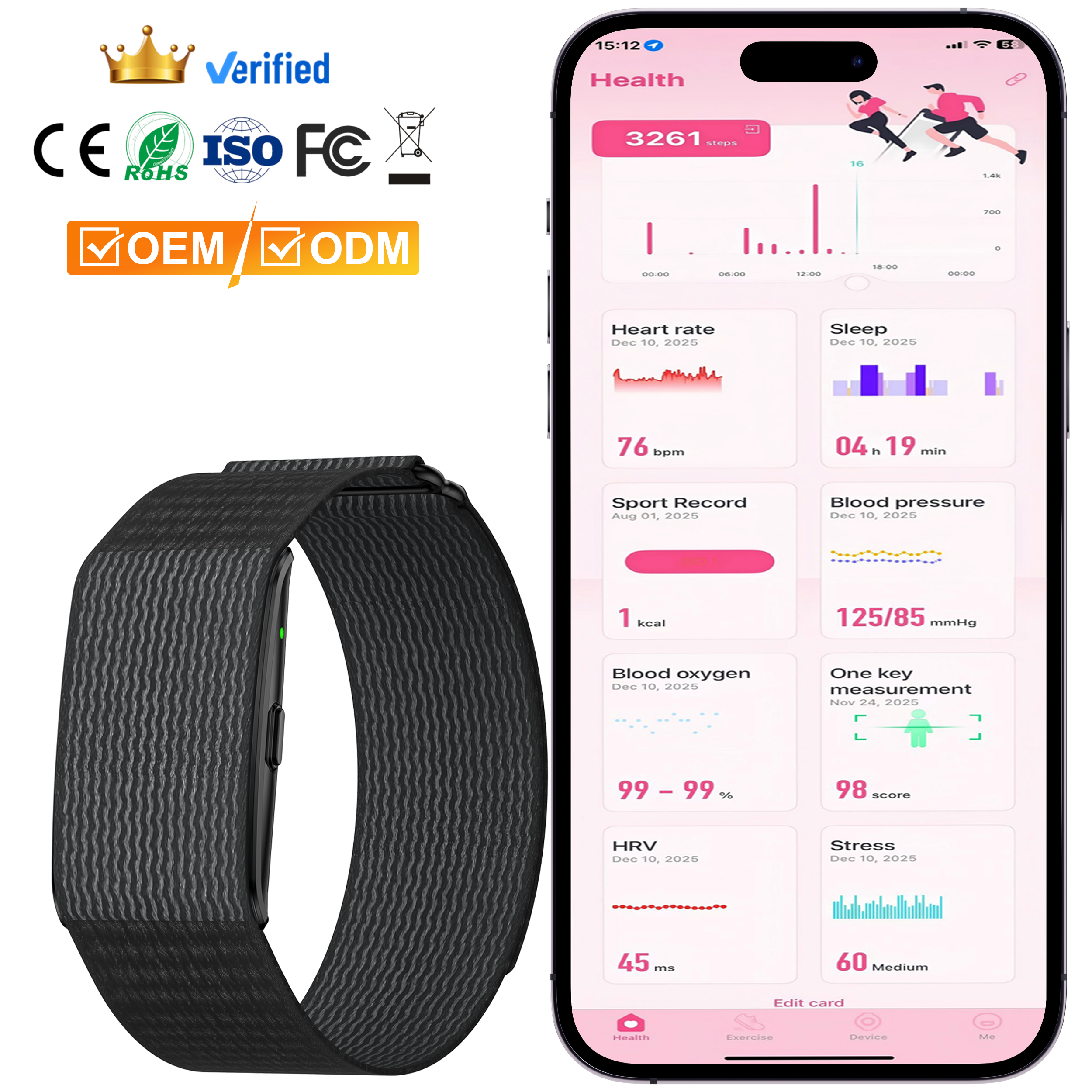
H59Pro Smart Band NRF54L15 BT6.0 24H Monitor
Nordic nRF54L15
BT 6.0 Dual-Mode
30-Day Runtime
1ATM Sealed
Standard, customizable, and white-label hardware platforms validated across multi-wavelength PPG sensor stacks, ultra-low power RTOS firmware, and medical-grade data synchronization engines.
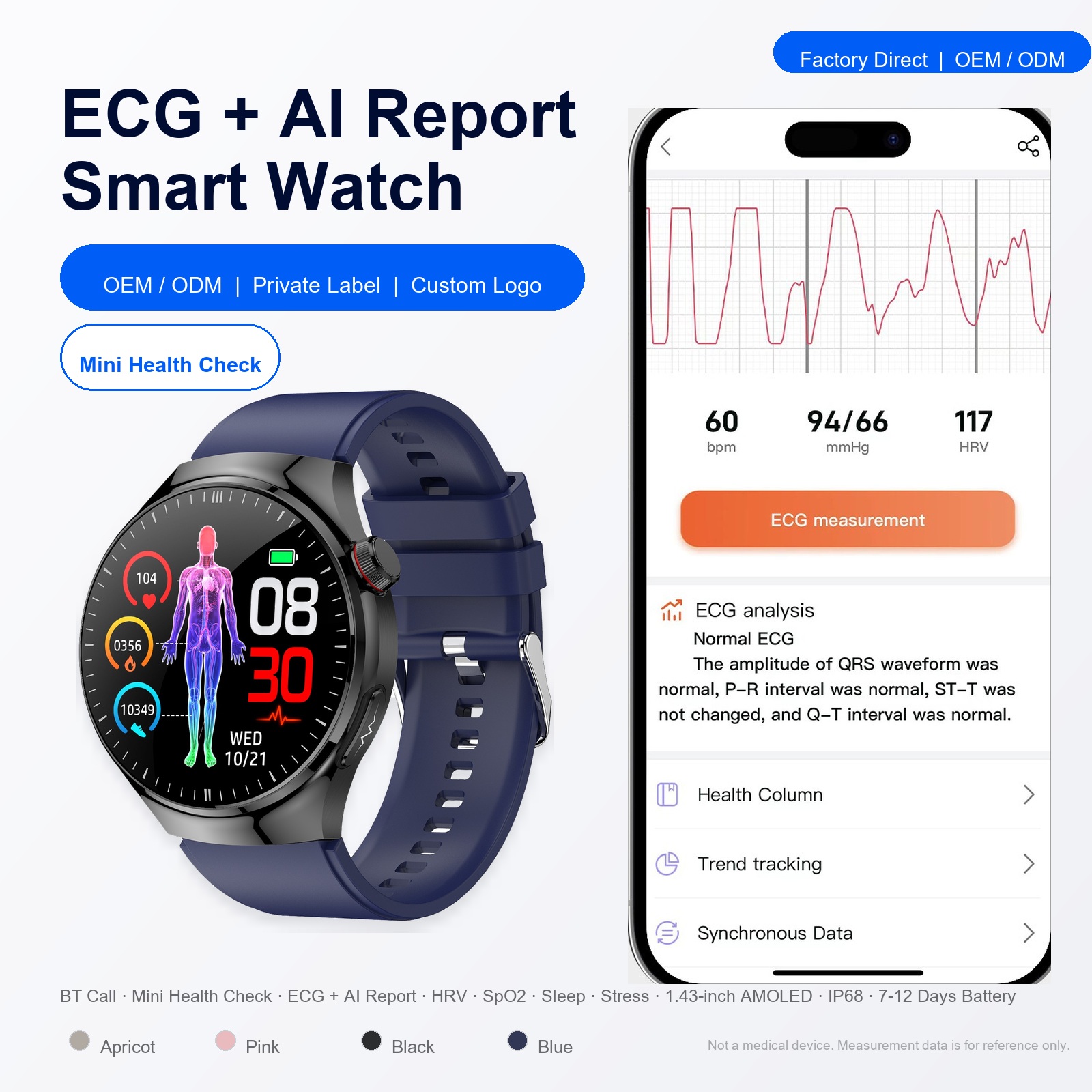
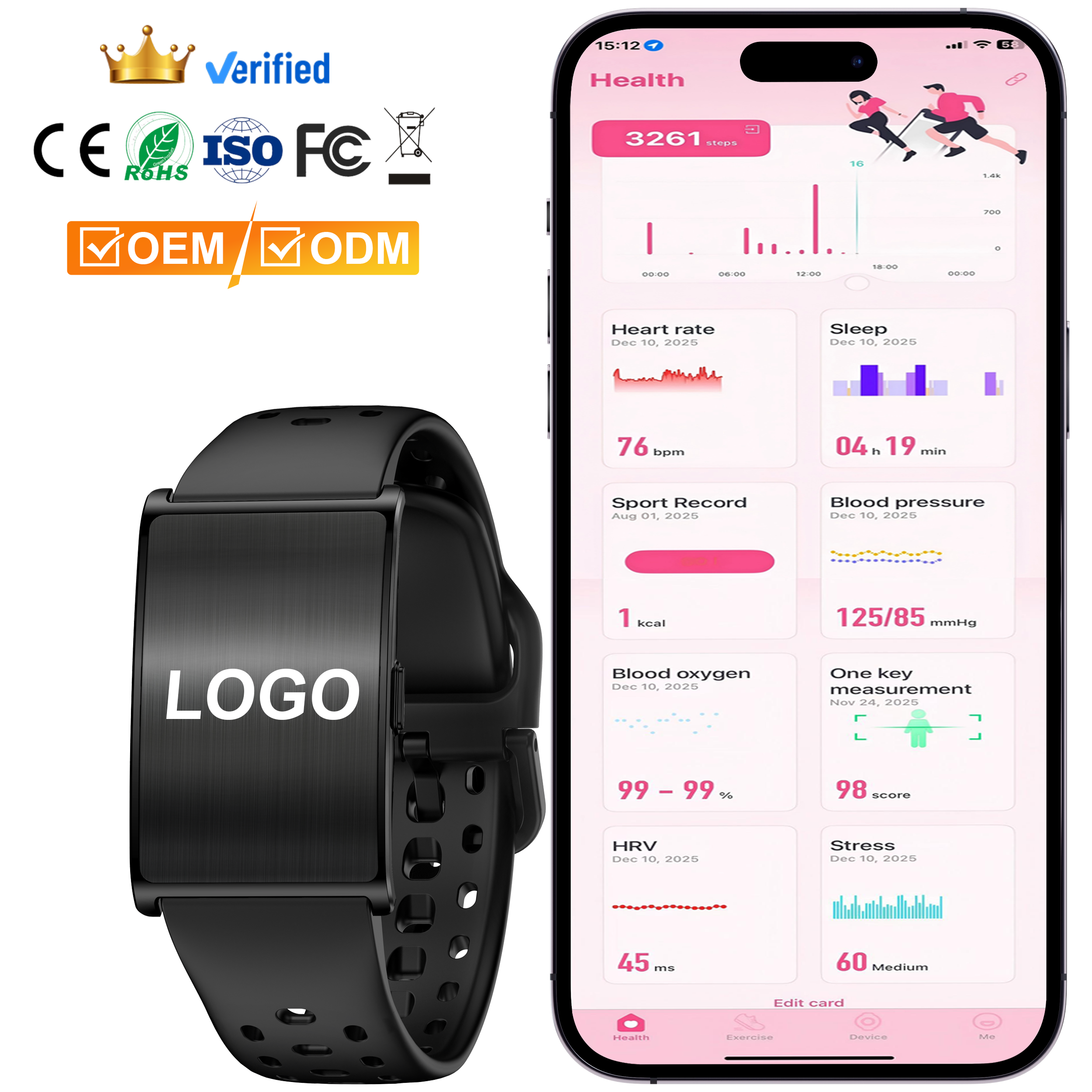
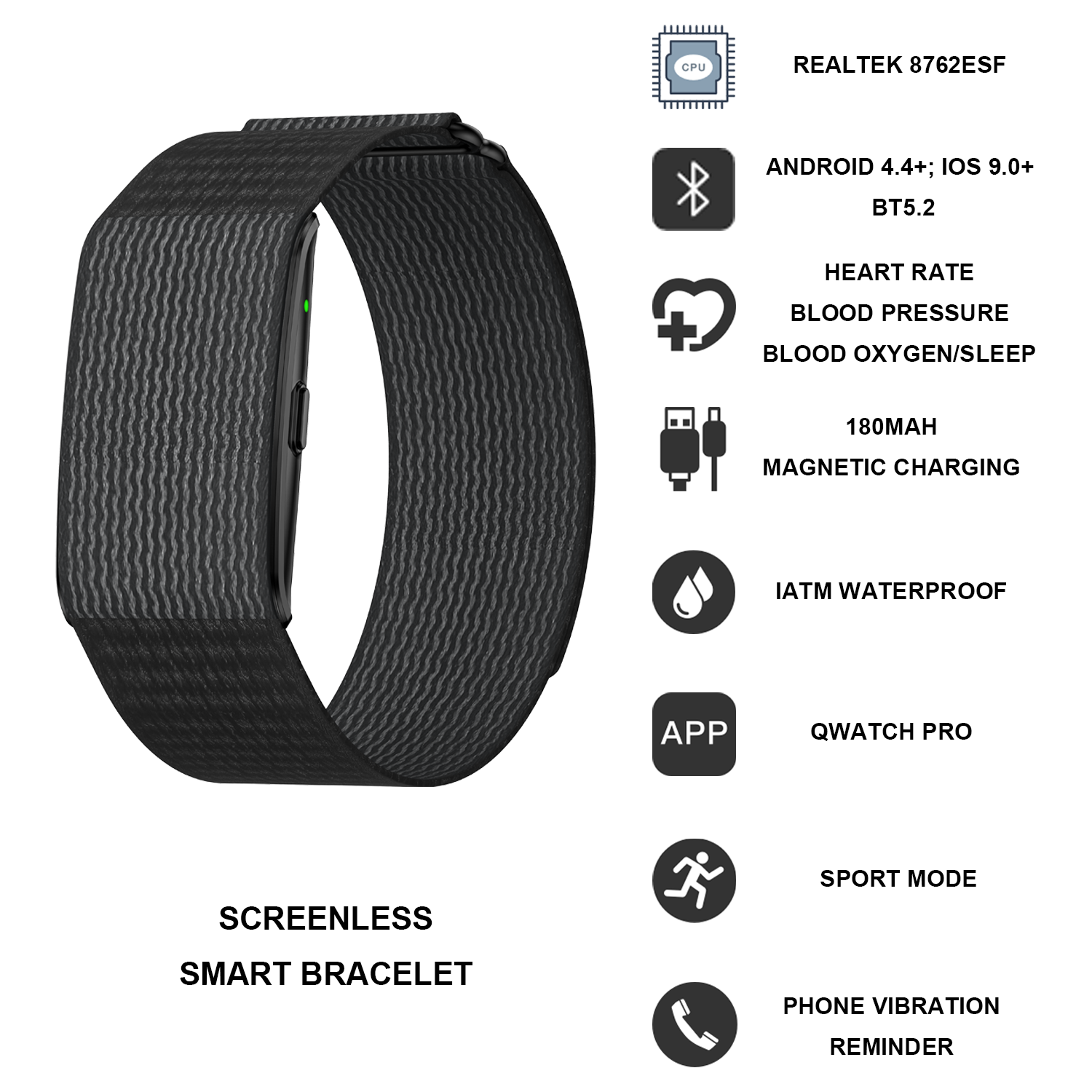
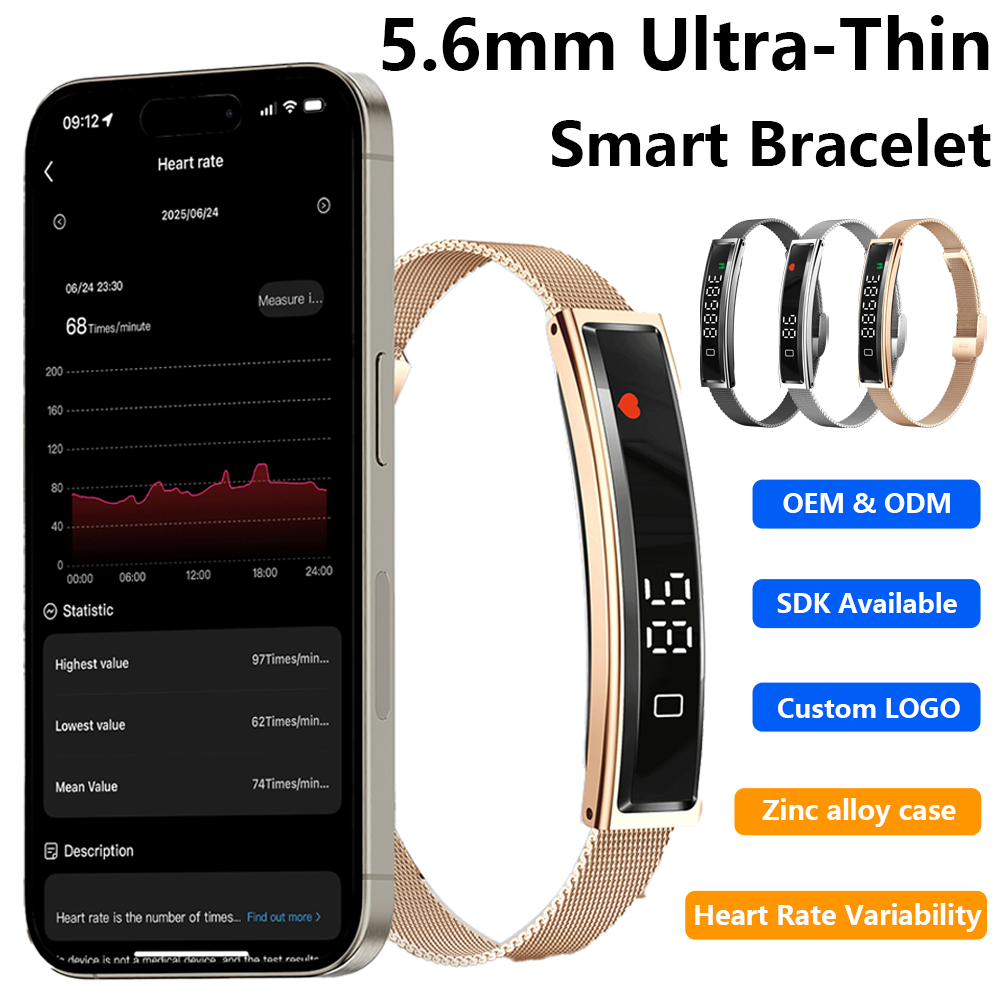
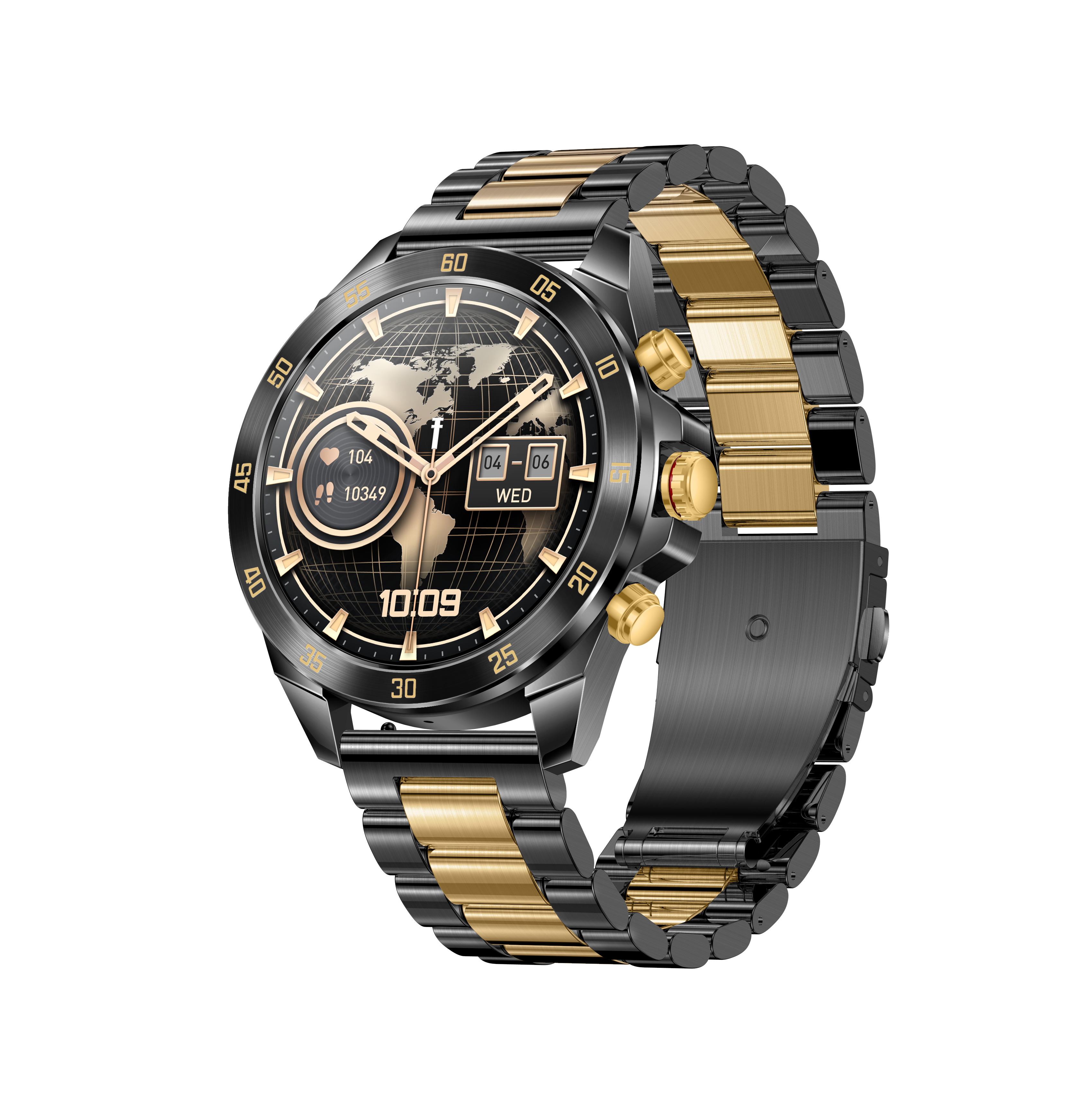
For modern electronic importers, consumer health brands, and telehealth enterprise programs, identifying a reliable factory begins with an uncompromising analysis of biometric hardware design. Wrist-worn heart rate monitors operate on the core physical principle of Photoplethysmography (PPG). By emitting specific light wavelengths (typically green light at ~525nm for superficial microvascular capillary beds, accompanied by infrared at ~940nm for deeper tissue perfusion and SpO2 calculation), the watch photodiode array detects volumetric variations in arterial blood flow modulated by ventricular contraction cycles.
However, commercial failure rates in mass-market devices stem not from ideal lab conditions, but from environmental and physiological motion artifacts. A premier OEM/ODM manufacturer differentiates its platforms through precise sensor topology, optical isolation barriers, and real-time firmware filtering:
Pairing 525nm green emitters with 660nm red/940nm infrared arrays allows simultaneous extraction of continuous pulse rate, peripheral oxygen saturation (SpO2), and resting heart rate variability (HRV).
Accelerometers and gyroscopic sensors track arm movement frequencies in parallel. Adaptive Kalman and recursive least squares (RLS) filters subtract motion artifacts from raw photodiode current waveforms.
Dynamic optical gain controls automatically step up constant LED current driving voltages when skin pigmentation or subcutaneous adipose tissue density attenuates backscattered photon reception.
Molded convex PMMA/sapphire lens geometries concentrate incoming photons directly onto the silicone receiver surface, dramatically reducing crosstalk, air gaps, and external ambient lumen leaks.
When selecting a manufacturing partner, enterprise sourcing agents must verify whether the supplier writes native low-level DSP (Digital Signal Processing) drivers or merely deploys standard reference firmware from microchip vendors. Factories possessing dedicated in-house algorithmic teams can achieve medical-adjacent correlations ($r > 0.94$) against clinical ECG telemetry (Holter monitors) during strenuous running, cycling, and interval exercises.
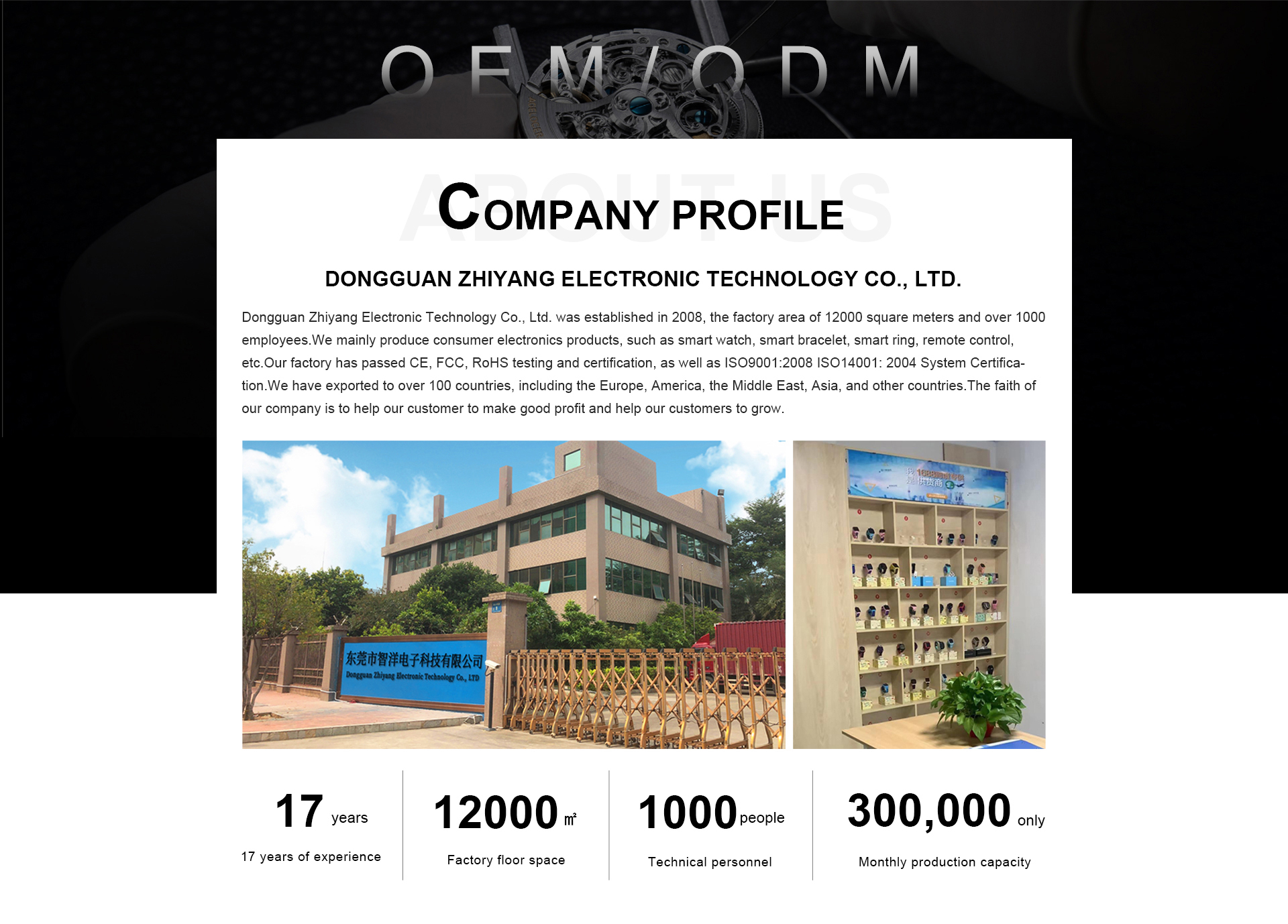
Headquartered in Songshan Lake High-Tech Park, Dongguan—the epicenter of global consumer electronics hardware—Brainox operates as an SGS On-Site Verified Multispecialty Supplier bridging clinical-grade sensor research with scalable assembly.
Unlike simple traders, our facility maintains a 15-instrument reliability laboratory and enforces a strict 19-step quality inspection framework on every production run. Our 42 full-time engineering and operations specialists manage firmware tailoring, custom tooling fabrication, circuit layout optimization, and worldwide regulatory filings.
Anticipating hardware transition cycles ensures procurement teams do not commit capital to architectures facing near-term obsolescence.
The adoption of ultra-dense microcontrollers like the Nordic nRF54L15 architecture enables complex on-chip machine learning while cutting dynamic current draw to sub-45 µA/MHz. Devices like the H59Pro deliver 30 to 50 days of active 24/7 heart monitoring on miniature 180mAh cells without cumbersome recharging intervals.
Driven by corporate wellness mandates, athletic recovery protocols (Whoop paradigm), and digital detox initiatives, screenless trackers (such as DS07 and H59Pro faceless bands) represent the fastest-growing enterprise SKU. Removing the display reduces mechanical ingress risk, drops bill-of-materials costs by 35%, and maximizes compliance.
Optical pulse transit time (PTT) estimation is rapidly transitioning toward hybrid physical air-pump cuff integration. Combining micro air pumps that compress the radial artery with dual-sensor optical verification satisfies rigorous clinical compliance while maintaining standard smartwatch wrist ergonomics.
Modern B2B buyers no longer evaluate hardware solely as standalone retail units. Telehealth platforms, life insurance actuaries, and remote patient monitoring (RPM) groups require end-to-end data pipeline control. Leading factories must provide complete, customizable white-label iOS and Android software development kits (SDKs), Bluetooth low energy GATT communication protocols, and Webhook cloud integration capabilities.
Our engineering suite permits enterprise clients to route encrypted biometric telemetry—such as beat-to-beat RR intervals, real-time pulse curves, and body core temperature differentials—directly into HIPAA-compliant and GDPR-compliant private servers, bypassing third-party consumer clouds entirely.

Select the ideal biometric form factor based on silicon capability, operating temperature envelope, and targeting domain.
| Model Series | Display Stack | Sensor Architecture | Battery / Standby | Water Ingress | OEM Depth |
|---|---|---|---|---|---|
| H59Pro Series | Screenless Faceless Band | Dual-LED Dynamic PPG + 3D G-Sensor | 180mAh / Up to 30 Days | 1ATM / IP68 | Full ODM / SDK |
| TK26P Series | 1.43" AMOLED 466*466 | TI AFE + Single-Lead ECG + HRV + PPG | 380mAh / 7–10 Days Active | IP68 Immersion | UI / Casing / Laser |
| H18 Cellular | IPS Full Laminated Touch | PPG + GNSS Quad-Satellite + 4G LTE | 850mAh / 2–3 Days Heavy | IP67 Sealed | Carrier Band Match |
| DS07 Series | Zero-Display Recovery | Continuous Optical HR + Body Temp NTC | 200mAh / 25–35 Days | IP68 Waterproof | Private Label SDK |
| H59MAX Series | LED Dot Matrix / Low-Power | AI Algorithm Sensor Fusion + SpO2 | 260mAh / 50 Days Standby | 1ATM Hydrostatic | Strap / Firmware / Box |
| NX16 Luxury | Round Curved AMOLED | Continuous Optical Heart Rhythm Matrix | 300mAh / 5–7 Days | 3ATM Pressure | Tooling & Materials |
Consumer wearables exhibit high RMA rates when manufactured under lax assembly protocols. Brainox implements 19 verifiable stages within our Songshan Lake test bench.
Spectrophotometric verification of OLED glass, AQL 0.4 optical lens clarity check, and lithium battery lot internal resistance profiling.
Over-the-air (OTA) Bluetooth antenna efficiency, matching circuit TRP/TIS measurements, and carrier band validation.
100% non-destructive differential pressure testing verifying O-ring seals, acoustic membrane porosity, and optical lens gluing.
High-load cyclic run with active sensor LED flashing and continuous Bluetooth broadcasting to eliminate early electronic mortalities.
Tri-axial shake table testing matching ISTA 2A vibration standards to simulate maritime, air courier, and freight conditions.
Continuous 1.0-meter fall rotations inside automated steel tumble drums to verify structural casing rigidity and solder integrity.
48-hour continuous atomized salt vapor testing to prove corrosion immunity across charging pins, 316L cases, and buckle fasteners.
Rapid transitions from -20°C to +60°C within programmable climatic chambers to prevent sensor calibration drift and glue delamination.
Stress storage of battery modules at +70°C to inspect protection IC thresholds and eliminate outgassing or swelling risks.
Concrete-impact freefall tests impacting six faces, eight corners, and twelve edges from 1.2-meter heights without structural failure.
Real water tank immersion to verify claimed IP68, 1ATM, or 3ATM ratings under steady static hydrostatic fluid pressures.
High-potential insulation barrier testing ensuring electromagnetic safety and absolute human body galvanic separation.
±8kV contact and ±15kV air discharge static guns discharged across touchscreens and metallic buttons to ensure complete reboot-free stability.
Individual cell capacity matching, C-rate charge curve logging, and internal impedance grouping ensuring uniform runtime specs.
Automated robotic pull rigs exercising silicone, fluoroelastomer, and leather wristbands across 5,000 continuous pull-stretch cycles.
Diamond stylus scratch tests verifying Mohs 7+ hardness on tempered glass and anti-fingerprint oleophobic coating durability.
Automated pneumatic mechanical fingers actuating physical crowns and side buttons through 100,000 consecutive depressions.
Simultaneous batch firmware flashing, memory sector read/write tests, and dynamic display burn-in screening before final enclosure.
AQL 0.65 visual finish audit, packaging integrity verification, serial number / MAC address database sync, and manual checklist.
Direct oversight of container palletization, moisture silica packing, and export maritime documentation handling.
Scale engineering investment based on order volume, market positioning, and speed-to-market targets.
Rapid market entry within 2–3 weeks. Includes silk-screen/laser etched logos on the rear sensor ring or metal bezel, custom full-color retail packaging, custom localized instruction manuals, and pre-loaded default watch faces.
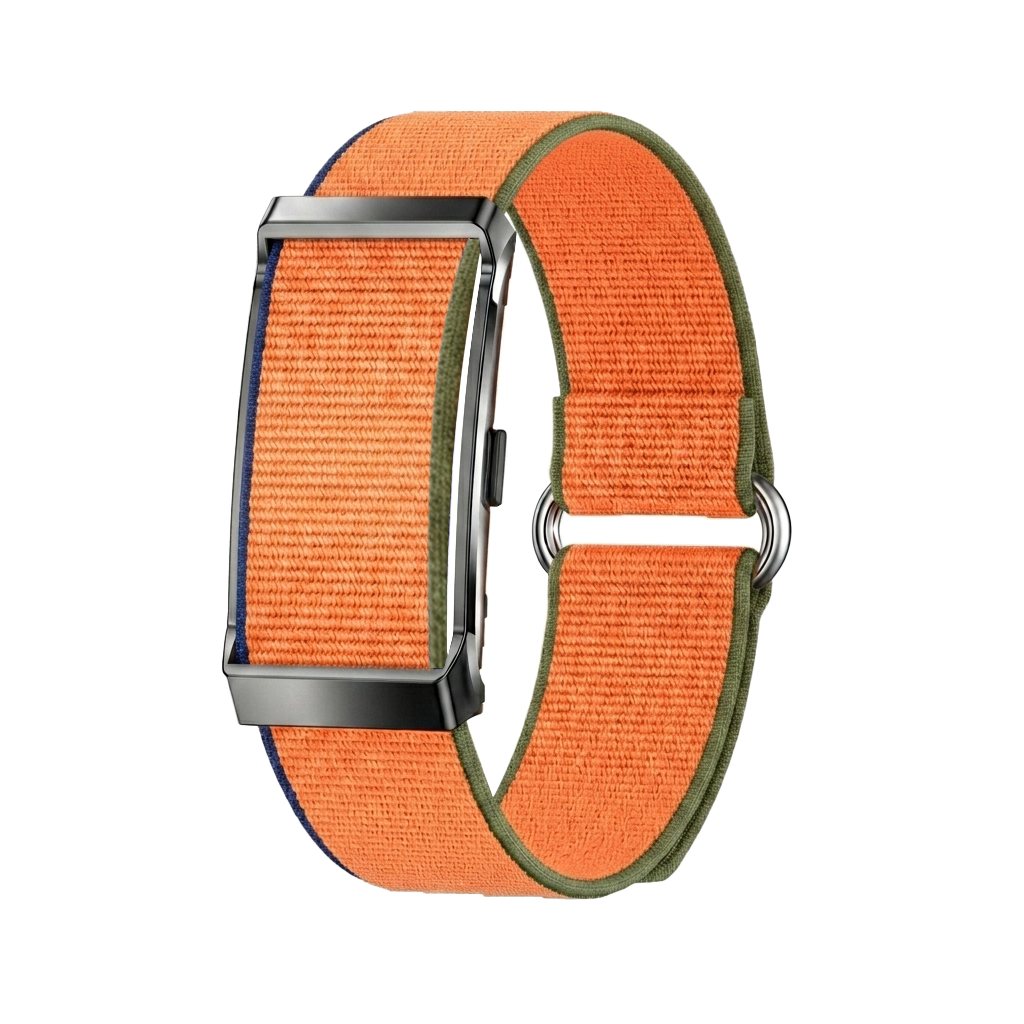
Color-matching Pantone casings via specialized PVD (Physical Vapor Deposition) or anodization coatings, custom strap tooling (custom patterned silicone or woven recycled ocean plastics), and customized boot animations.
Custom GUI redesign, native language translations beyond default system fonts, tailored workout profiles, localized health alerts, and proprietary communication protocols for closed corporate environments.
End-to-end hardware architecture from industrial design (ID) and mechanical tooling (MD) to PCBA layout, antenna tuning, complete companion app white-labeling, and international certification filings (FCC, CE, RoHS, UN38.3).
Direct, transparent answers addressing typical B2B contracting, compliance, and supply chain concerns.
Consult directly with our Dongguan engineering and export team. Receive comprehensive CAD files, evaluation samples, optical sensor test benches, and a transparent pricing quotation for your private-label rollout.