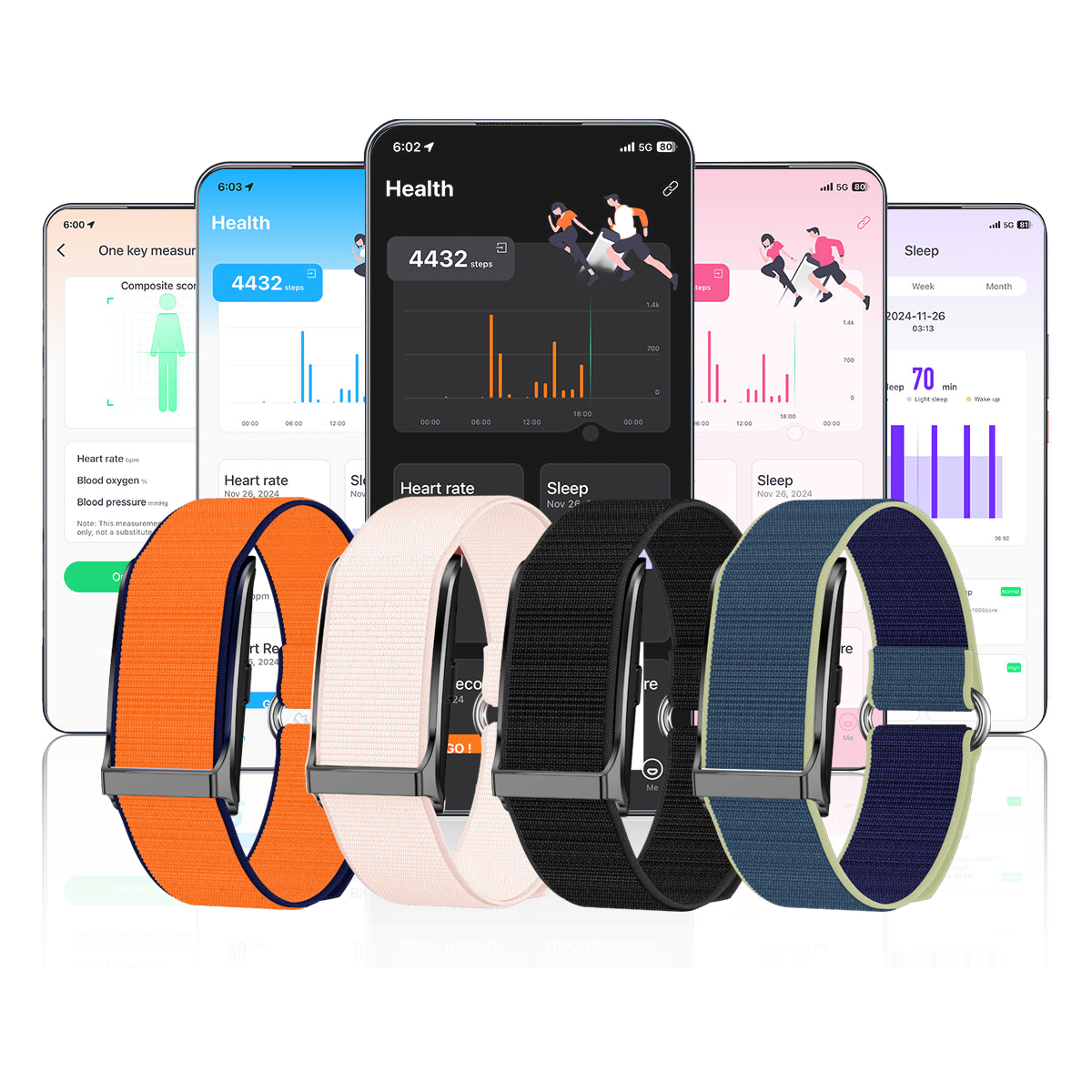
Direct Factory Production
Precision Engineered Ultra Thin & Specialized Wearables
Explore eight core production models engineered for global consumer markets, private-label fitness platforms, and custom medical-grade biometric deployments.
Technical Whitepaper
Architecting the Ultra Thin Smartwatch: Engineering Limits & Breakthroughs
Analyzing component stacking, thermal dissipation, micro-structural rigidity, and battery density challenges inside sub-8mm wearable chassis.
1. The Physics of Thinness: High-Density SIP Stacking
In standard wearable electronics, typical chassis thickness fluctuates between 11.5mm and 14.2mm. Achieving an ultra-thin form factor below 8.5mm—or sub-7mm in screenless health bands like our H59 series—requires a complete overhaul of traditional PCB layout paradigms. Dongguan Brainox Technology utilizes high-density System-in-Package (SiP) technology combined with 8-to-10 layer High-Density Interconnect (HDI) rigid-flex printed circuit boards. By embedding passives, crystal oscillators, and low-power BLE microcontrollers (such as Nordic Semiconductor or Realtek platforms) into integrated multi-die modules, vertical Z-height is reduced by up to 38% compared to surface-mount discrete components.
Furthermore, structural integration transitions from classic multi-tier internal plastic brackets to direct CNC structural mid-frames crafted from 316L surgical stainless steel or aircraft-grade 6000-series aluminum. This direct integration leverages the exterior metal enclosure as both the primary chassis backbone and the RF ground plane, eliminating dead space and safeguarding fragile AMOLED display driver flex cables against torsion shear during drop impacts.
"True ultra-thin wearable engineering is not merely trimming plastic off the bezel; it is an uncompromising discipline of micro-millimeter tolerance allocation across battery volumetric energy density, glass curvature, and RF antenna clearance."
Custom Curved Li-Po Packaging
Standard rectangular pouch cells leave unutilized volume in circular watch geometries. Brainox custom-engineers stepped and shaped lithium-polymer batteries utilizing high-voltage 4.45V cathode chemistry, reaching up to 680 Wh/L energy density while resisting thermal expansion in ultra-confined casings.
LDS Antenna Integration
Laser Direct Structuring (LDS) molds the RF antenna tracks directly onto the inside perimeter of the poly-carbonate or ceramic case back. This preserves 360-degree cellular, GPS, and Bluetooth transmission efficiency without consuming precious board thickness.
Optical Sensor Low-Noise Array
By recessing multi-wavelength photoplethysmography (PPG) LEDs and photodiodes into a precision-milled curved sapphire or 2.5D glass bottom window, optical cross-talk is minimized while ensuring skin coupling without causing uncomfortable protrusion marks on user wrists.
Strategic Market Outlook
Future Procurement Trends: Where Smart Wearables Are Heading (2026–2030)
B2B brand procurement is moving rapidly from commoditized step counters to certified preventative diagnostic tools and ambient non-intrusive computing.
The global smartwatch and connected health device market is experiencing an unprecedented inflection point. Over the next five years, corporate buyers, telecommunication carriers, and wellness platforms must navigate three major generational shifts:
1. Medical-Grade Cuff Miniaturization
Optical PPG blood pressure estimates face increasing scrutiny from global health authorities. Sourcing demand has pivoted decisively toward true oscillometric systems. Factory innovations—such as micro-piezoelectric air pumps coupled with ultra-thin inflatable TPU airbags built directly beneath the watch strap—allow devices like our TK65/GS500 series to deliver clinical-grade systolic and diastolic measurements in sleek form factors.
2. Ambient & Screenless Form Factors
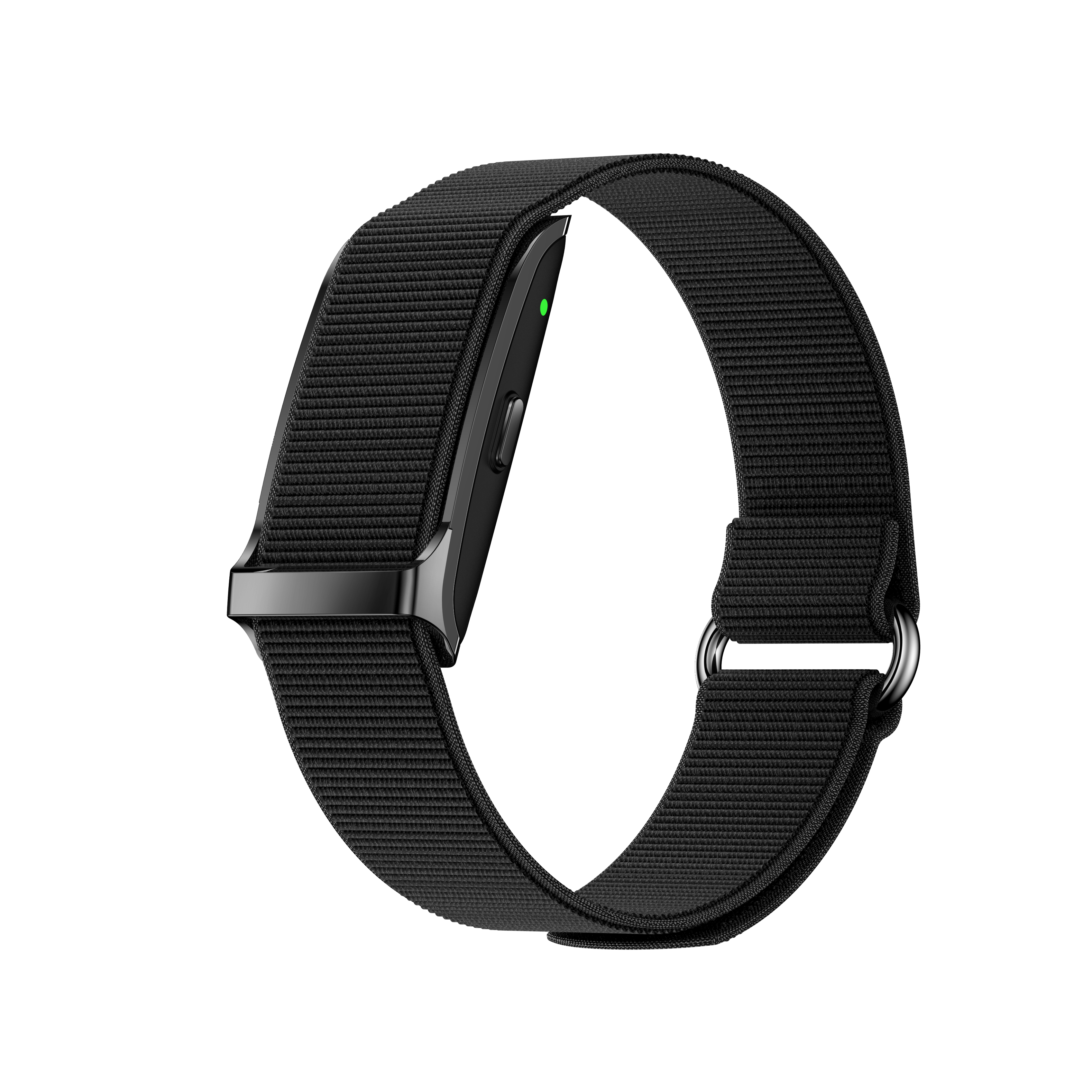
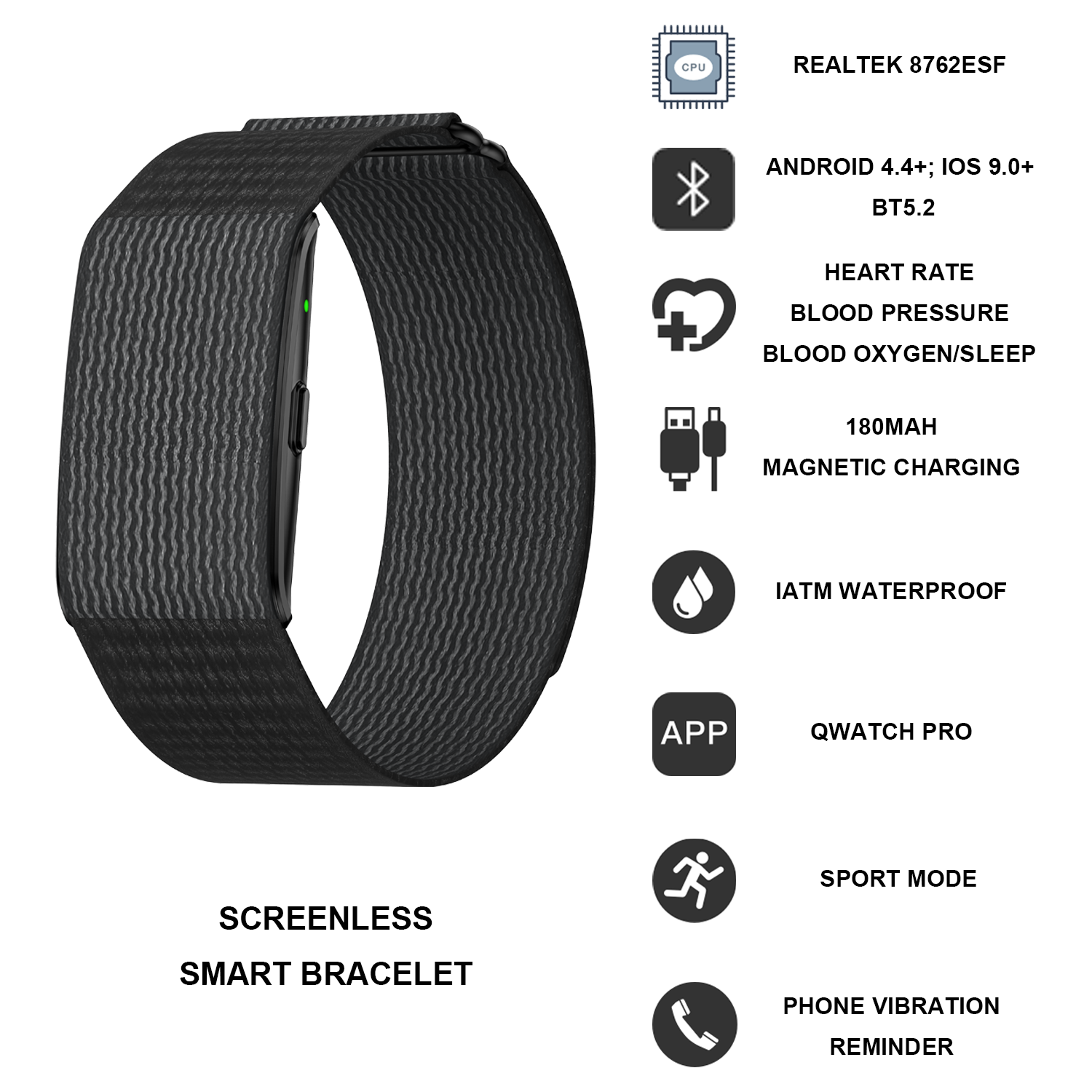
Digital display fatigue is driving massive adoption of faceless trackers (such as the H59 and H59Pro series). B2B wellness enterprises and insurance conglomerates increasingly procure screenless bracelets that prioritize continuous 30-to-50 day battery monitoring, seamless biometric telemetry, and zero notification distraction, paired with proprietary AI health analytical engines.
3. Embedded Multimodal AI Ecosystems
Future wearable hardware is an input node for LLM agents. Integrating edge microphones, low-power DSPs, and Bluetooth 5.4 allows smartwatches and smart vision frames to deliver context-aware summarization, voice-driven AI assistance, and instant two-way multi-language translation without relying on bulky smartphone interaction loops.
Technology Stack Selection Matrix for B2B Importers
Before launching an OEM or ODM manufacturing project in China, understanding trade-offs between processing architecture, display technology, and battery endurance is crucial for margin protection and warranty risk mitigation.
| Architecture Type | Typical Thickness | OS / Platform | Battery Life | Ideal Target Market |
|---|---|---|---|---|
| Ultra-Thin Screenless | 6.8mm - 8.2mm | Ultra-Low Power RTOS / Nordic | 25 - 50 Days | Subscription health platforms, insurance groups, corporate wellness |
| Slim AMOLED Bluetooth | 8.5mm - 9.8mm | Custom RTOS / Realtek / JL | 5 - 10 Days | Fashion lifestyle brands, consumer electronics retail, sports fitness |
| Micro-Pump Oscillometric | 11.5mm - 13.0mm | Dual-Core Sensor Hub RTOS | 4 - 7 Days | Elderly healthcare, remote clinical trials, pharmacy wellness retail |
| Full 4G Standalone Watch | 13.8mm - 15.5mm | Android 8.1 / Android 11 OS | 1 - 2 Days | Lone worker safety, senior fall detection SOS, kids GPS security |
Verified Manufacturing Authority
Dongguan Brainox Technology: Precision Engineering Ecosystem
Combining R&D agility, certified in-house laboratories, and deep Pearl River Delta supply chain clustering to safeguard your brand integrity.
SGS On-Site Audited Infrastructure in Songshan Lake
Dongguan Brainox Technology Co., Ltd. operates out of Songshan Lake High-Tech Park, Dongguan—the epicenter of China's advanced smart wearable and telecommunications ecosystem. Being located within minutes of tier-one display panel foundries, battery module laboratories, and high-precision CNC tooling facilities empowers us to iterate rapid prototyping cycles with uncompromised component traceability.
Our operation houses 42 verified engineering and quality assurance professionals managing 15 dedicated testing instruments. Rather than outsourcing quality verification to generic third-party packagers, every single production batch undergoes our rigorous 19-procedure quality inspection lifecycle before export clearance.
SGS On-Site Verified
Legal premises, operational capacity, and credit score verified on-site by SGS Group.
Full Tier ODM/OEM
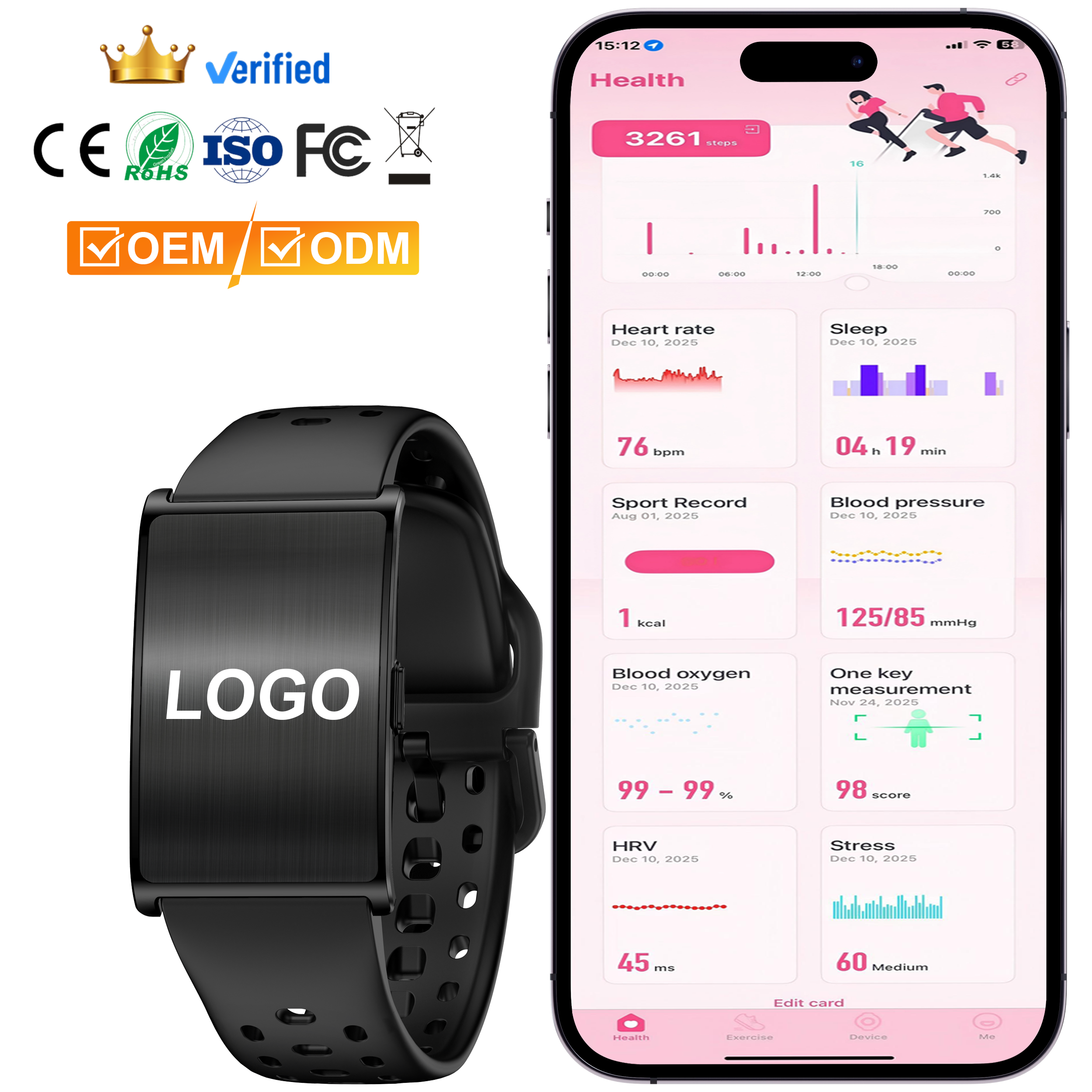
Tailored options from simple laser logos to complete firmware, custom mold, and SDK access.
In-House QC Lab
Equipped with ESD shock, salt spray, simulated transport, drum drop, and high-temp aging test beds.
Air-Tight Waterproofing
Both pneumatic dry air-decay testing and pressurized water tank immersion on every production run.
Rigorous Quality Verification: The 19 Test Procedures
Smart wearables fail in consumer markets primarily due to moisture ingress, electrostatic shocks, or early battery degradation. Our factory prevents warranty claims through specialized in-house stress testing:
Air-Tight Leak Testing
Multi-channel differential pressure decay instruments test 100% of watch housings to verify IP67, IP68, or ATM sealing prior to board assembly.
ESD Electrostatic Test
Simulating up to ±8kV contact and ±15kV air discharge to guarantee touch screens and internal chips survive winter atmospheric static shocks.
Thermal & Humidity Aging
Programmable climatic chambers cycle devices between -20°C and +60°C with 95% relative humidity to screen out adhesive or solder joint failures.
Battery Grading & Cycling
Capacity-grading dividers evaluate internal cell chemistry impedance and ensure actual milliamp-hour delivery matches datasheet declarations.
Buyer Knowledge Center
Frequently Asked Questions on Ultra Thin Smartwatch Procurement
Straightforward answers addressing OEM customizations, cellular band certifications, waterproof integrity, and firmware SDK access.
What customization levels does Brainox offer for ultra-thin smartwatches?
We provide four well-defined OEM/ODM integration tiers:
Level 1 (Minor Customization): Laser etching of brand logo on rear casing/strap buckle, customized retail gift packaging, user manual localization, and custom Bluetooth pairing broadcast name (MOQ typically 500–1,000 pcs).
Level 2 (Firmware & UI Customization): Custom boot-up animation, pre-loaded proprietary watch faces, default localized UI language tables, and personalized app splash screens.
Level 3 (Hardware Cosmetic ODM): Custom CNC chassis anodization colors, physical button tooling modifications, custom strap materials (fluororubber, milanese mesh, full grain leather), and bespoke glass edge chamfering.
Level 4 (Full Turnkey Customization): Complete mechanical layout, custom multi-layer rigid-flex PCBA design, unique sensor matrix selection, and direct access to Bluetooth API / mobile SDK for proprietary health cloud platforms.
How do you verify true IP68 or 3ATM/5ATM waterproof ratings in ultra-thin casings?
Ultra-thin wearables present tight dimensional tolerances where structural adhesives must be dispensed with microscopic accuracy. Brainox utilizes automated automated high-precision dispensing robots applying dual-cure structural epoxies resistant to sweat and thermal cycling. Each production batch undergoes dual-stage verification: first, a 100% non-destructive air-pressure vacuum decay test that flags micro-voids without wetting the circuitry; second, destructive immersion and high-pressure water column testing on sampled units per MIL-STD / ISO 22810 standards.
Can 4G SIM smartwatches and fall detection models be configured for our regional cellular bands?
Yes. Cellular smartwatches (such as the H18, M99, and H01C fall detection models) rely on region-specific modem modules. Before quoting or sampling, our engineers will request your exact target sales territory and preferred network carriers. We configure modem RF front-ends to support European bands (B1/B3/B7/B8/B20), North American bands (B2/B4/B5/B12/B13/B66), or Latin American / APAC frequencies, ensuring VoLTE carrier profiles are pre-certified to prevent connection drops.
What is the difference between optical PPG blood pressure and air-pump oscillometric watches?
Optical PPG blood pressure utilizes algorithms to estimate blood pressure trends based on pulse wave transit time (PWTT) or pulse contour analysis. While useful for general wellness monitoring, PPG is sensitive to skin tone, wrist movement, and vascular stiffness. In contrast, our air-pump models (like TK65 and GS500) integrate a micro-piezoelectric pump and an inflatable strap bladder. This physically occludes the radial artery and measures true oscillometric pressure fluctuations as the cuff deflates—delivering significantly higher clinical correlation for health-tech and senior care buyers.
What international export certifications and lithium battery compliance files do you provide?
All Brainox export devices are designed to comply with CE (RED), RoHS 2.0, and FCC certifications. Since smart wearables contain integrated lithium-ion batteries, we provide full UN38.3 test summaries, Material Safety Data Sheets (MSDS), and drop-test transport appraisal reports for seamless air cargo (IATA DGR) and ocean container clearance. Certified test reports for specific models can be provided during the formal sampling stage.
Ready to Engineer Your Private-Label Smartwatch Line?
Consult with our Dongguan engineering team for complete BOM breakdowns, custom mold feasibility analyses, and rapid sample turnaround times.
Get a Quote