Choosing the right Digital Smart Watch for wholesale requires more than comparing screen size and retail price. Buyers must connect market evidence with real customer needs, supplier capability, and long-term product reliability. A low quotation can look attractive, yet weak batteries, unstable applications, or poor packaging may create expensive returns.
Industry reports show why careful selection matters. IDC’s Worldwide Quarterly Wearable Device Tracker identifies wearables as a large, evolving technology category, supported by health tracking, mobile connectivity, and consumer convenience. Grand View Research also forecasts continued growth in the global smartwatch market, although growth rates vary by region and product segment. Counterpoint Research reported weaker smartwatch shipments in 2024, reminding wholesalers that demand is not guaranteed. Trends can cool quickly.
This guide examines practical criteria for wholesale purchasing. These include chipset performance, battery endurance, display durability, health-sensor consistency, software compatibility, certification, and after-sales support. A watch that lasts seven days in a supplier test may perform differently with continuous GPS and notifications. That difference matters.
Experienced buyers should request samples before confirming volume orders. Test them with common Android and iOS devices. Check charging temperature, strap quality, Bluetooth stability, and data synchronization. Ask for test reports and verify whether claims come from independent laboratories. Standards and documentation vary across markets.
No single model fits every distributor. That is the difficult part. A fashion retailer may prefer slim cases and bright colors, while a fitness channel may need GPS accuracy and water resistance. The best wholesale decision balances measurable performance, dependable supply, customer expectations, and honest product positioning. This approach supports stronger margins and fewer avoidable complaints.
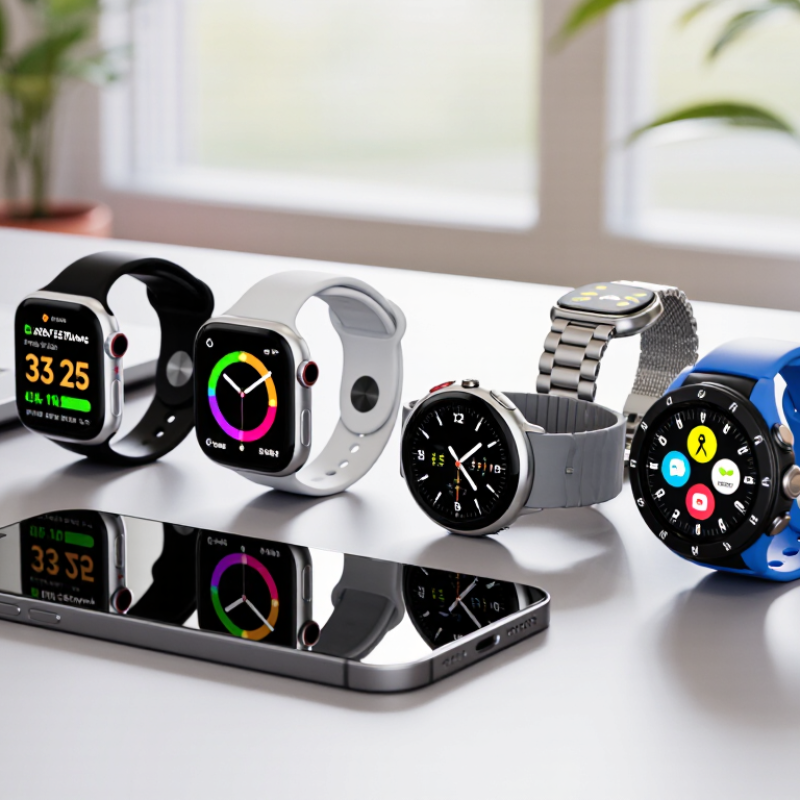
How to Choose the Best Digital Smart Watch for Wholesale?
Define Wholesale Buyers’ Needs and Target Market
Wholesale success begins with the buyer, not the watch. Identify the sales channel first. A sports retailer needs health tracking and durable straps. A gift shop may prefer elegant colors, simple controls, and attractive packaging. Online sellers often prioritize clear product photos, stable supply, and competitive pricing. Know the customer.
Study the target market carefully. Compare age, income, habits, climate, and smartphone preferences. A basic fitness watch may suit students, while office workers may value message alerts, sleep tracking, and discreet designs. Retailers should also check local language support, charging methods, return expectations, and required product certifications. These details affect real purchasing decisions.
Request samples before placing a large order. Test screen visibility under bright sunlight, button response, battery performance, and pairing stability. Check whether the companion application is easy to use. Ask for transparent specifications, warranty terms, spare parts, and after-sales support. Do not trust a low unit price alone. It can hide weak packaging or high defect rates. Mistakes happen.
A small pilot order can reveal customer complaints before expansion. Track which features buyers actually use. Many shoppers request advanced functions but rarely open them. That gap deserves attention. Wholesale buyers should review minimum order quantities, lead times, customization limits, and production consistency. A reliable supplier communicates clearly when problems appear, even when the answer is inconvenient.
Wholesale buyers should prioritize product reliability, target-market fit, compliance, and total landed cost before selecting a digital smartwatch supplier.
This 100-point procurement benchmark gives the greatest weight to demand fit and product reliability, while also accounting for pricing, battery performance, health features, durability, compliance, and after-sales support.
How to Choose the Best Digital Smart Watch for Wholesale?
A strong wholesale smartwatch must offer useful features, not just a bright screen. Check heart-rate tracking, sleep monitoring, step counting, call alerts, and workout modes. Test each function on sample units before placing a large order. A sensor can look accurate in a brochure but perform differently during movement. Battery life also matters. Measure real usage with notifications enabled, not only standby time. Screen brightness, touch response, button strength, and charging stability reveal everyday quality.
Compatibility can decide whether customers keep or return the watch. Confirm support for common mobile operating systems, Bluetooth versions, app languages, and phone permissions. Check whether pairing takes less than a minute. Some watches connect quickly but lose data later. That weakness is easy to miss. Review update procedures and privacy settings carefully. Clear instructions reduce support requests and improve buyer confidence. Water resistance should be verified through technical documents, not assumed from marketing language.
Tips: Request several samples from the same production batch. Test them for seven days. Record battery drain, connection drops, charging temperature, and screen scratches. Ask for inspection records and available compliance documents. Compare warranty terms, replacement procedures, and packaging protection. I have found that lower prices often hide weaker charging cables or inconsistent sensors. Still, premium features do not always create better sales. Match the watch with your buyers’ phones, budgets, and daily habits. Recheck your assumptions.
Choosing a digital smart watch for wholesale starts with a careful supplier review. I examine factory records, product samples, and communication speed. A reliable supplier explains material choices, testing steps, and quality checkpoints clearly. Vague answers create expensive problems later.
Certifications should match the destination markets and product functions. Ask for current certificates, test reports, and the issuing laboratory’s details. Verify document numbers independently. A printed certificate proves little by itself. Check battery safety, charging performance, radio functions, and material compliance where relevant. I once trusted an outdated report and missed a revised component. That mistake delayed a sample approval by nearly three weeks. Certification review needs patience.
Production capacity matters beyond a factory’s monthly output claim. Request a realistic schedule for sampling, pilot production, and repeat orders. Ask how many assembly lines operate during busy periods. Review component stock, backup suppliers, inspection staff, and packaging capacity. A short video call can reveal crowded workstations or weak process control. Request a small pilot order before committing to a large quantity. Measure defect rates, screen brightness, button response, charging time, and packaging accuracy. Numbers help, but they can still hide seasonal pressure. Leave room for delays. A supplier may promise fast delivery, yet depend on one unavailable component. Written production milestones and inspection records make cooperation more reliable.
Calculate the landed cost before comparing supplier prices. Include the watch, packaging, freight, inspection, payment fees, and a small allowance for defects. A low unit price can look less attractive after shipping a bulky carton. Ask suppliers to quote the same order quantity and delivery terms. Then compare the total cost per sellable unit, not just the factory price. Check whether the quoted price includes chargers, straps, manuals, and custom packaging. Small omissions add up.
Minimum order quantities deserve equal attention. IDC reported that global wearable-device shipments reached 519.6 million units in 2023, down 1.7% from 2022. That broad market figure is not a forecast for your own shop, but it signals why oversized commitments deserve caution. Request pricing at several quantities, such as 100, 300, and 500 units. Compare the savings with the cash tied up in extra stock. Ask about mixed-color orders and repeat-order minimums, too. Details matter.
Test a sample before committing. Check screen readability under bright light, menu language, charging fit, and strap comfort. Record defects and calculate their cost. I would also leave room for uncertainty: demand estimates are often wrong, and a cheaper bulk order may move slowly. A simple spreadsheet helps. Track landed cost, expected selling price, payment timing, and the break-even quantity. One weak assumption can distort the whole plan.
Before placing a wholesale order, request working samples from the same product range you plan to buy. Wear one for several days and test the screen in bright light, the strap clasp, charging, and notification setup. Check whether the watch pairs reliably with common phones. Small flaws matter. A loose charging cable or unclear setup guide can become a repeated customer complaint. Keep notes and photos so you can compare samples with the final shipment.
Ask for warranty terms in writing, including the coverage period, excluded damage, proof required, and the process for replacing faulty units. Clarify who pays return shipping and whether replacement parts are available. Vague promises are difficult to use when a batch arrives with problems. One detail is easy to miss: confirm whether the warranty starts at shipment or delivery. That difference can affect your stock planning.
After-sales support deserves a practical test before you commit. Send a specific question about battery performance or a pairing issue, then note how quickly and clearly the supplier responds. Ask whether support includes troubleshooting guides, spare straps, or help with firmware updates. Save the contact details and agreed response times. A sample may work perfectly, yet real-world issues can still appear. I would not assume every defect will be solved quickly; build a modest allowance for delays into your purchasing plan.
Match features to the sales channel and customer. Sports shops may need durable straps and activity tracking, while gift shops may favor elegant colors and simple controls.
Test screen visibility in sunlight, button response, battery life, charging fit, and phone pairing. Try the companion app, too. Small flaws matter.
It can reveal defects and customer complaints before a larger commitment. Track which features people actually use, not just the ones they request.
Ask for clear specifications, warranty terms, spare parts, and after-sales support. Review production schedules, inspection records, and backup component plans. Vague answers are a warning.
Request current certificates and test reports, then verify their numbers and issuing laboratory independently. A printed document alone may not tell the full story.
Include packaging, freight, inspection, payment fees, and possible defects. Compare the cost per sellable unit, not only the factory price.
Request prices at several quantities, such as 100, 300, and 500 units. Compare savings against cash tied up in stock. Demand estimates can be wrong.
Ask about sampling, pilot runs, busy-season capacity, assembly lines, and packaging. Set written milestones. Leave room for delays; one missing component can slow delivery.
Choosing the best Digital Smart Watch for wholesale starts with understanding your target buyers, their preferred price range, and the features they value most. Compare options for display quality, battery life, health and fitness functions, durability, and compatibility with common mobile devices. Matching these details to your market helps you select products that are useful, reliable, and suited to customer expectations.
Next, evaluate suppliers based on product quality, relevant certifications, production capacity, and communication. Calculate the full cost of each order, including unit pricing, shipping, and minimum order quantities, before setting a realistic resale price. Request samples to check performance and finish, and review warranty terms and after-sales support. A careful assessment of these factors can reduce purchasing risks and support a dependable, profitable wholesale offering.