SGS On-site Verified Supplier Songshan Lake, Dongguan, China
0%

A Calling Smartwatch is more than a tiny screen for notifications. It can place or receive calls, either through a paired phone or its own cellular connection. That difference matters when you leave your phone on a desk, jog along a quiet path, or need both hands free. A Bluetooth model usually relies on a nearby phone. A cellular model can connect independently, typically through an eSIM and a carrier plan. Coverage, battery life, and setup all affect how well that promise works in daily use.

The wider wearables market shows why the category deserves careful attention. IDC’s Worldwide Quarterly Wearable Device Tracker reported 534.6 million wearable-device shipments in 2024, up 6.1% from 2023. That figure includes several kinds of wearables; it is not a smartwatch-only total. At Apple’s 2014 Watch unveiling, technology executive Kevin Lynch called the product “the most personal device we’ve ever created.” The quote captures a useful idea, though personal does not automatically mean practical. A watch may make a call convenient, but a small speaker can sound thin in a noisy street, and cellular use can drain its battery faster. This guide explains how calling watches connect, what their hardware does, and which limitations to check before buying. The details matter. We’ll separate genuine standalone calling from features that simply mirror a phone, so you can judge what fits your routine.
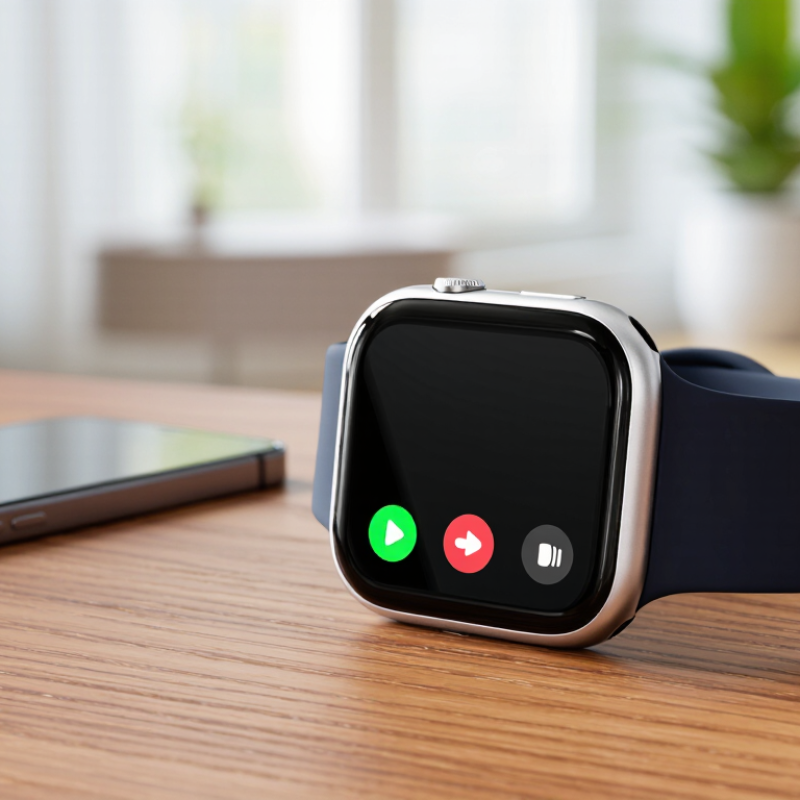
What Is a Calling Smartwatch and How Does It Work?

What Defines a Calling Smartwatch: Bluetooth-Tethered and Standalone Models

A calling smartwatch can handle voice calls, but the phrase covers two different setups. A Bluetooth-tethered model connects to a nearby phone, usually through a companion app. The watch uses its speaker and microphone, while the phone supplies the mobile connection. In practice, this is useful for a quick call while cooking or walking, when reaching into a pocket feels awkward. The phone still needs to be nearby and connected.

A standalone model can connect to a mobile network using an eSIM or SIM, depending on its design and service support. It can place and receive calls even when the paired phone is elsewhere. That freedom has trade-offs: network coverage, subscription requirements, battery use, and setup all matter. A small watch speaker also sounds different from a phone held to the ear. Not always ideal.

Before choosing, check how the watch handles contacts, emergency calling, and calls when the signal is weak. These details vary by model and carrier, so claims about “independent calling” deserve a closer look. Bluetooth models may suit people who keep a phone close; standalone models are more practical when carrying one is inconvenient. Neither option guarantees a clear call in a noisy station. The right fit depends on where calls happen, not just the feature list.

How Bluetooth Calling Uses the 2.4 GHz ISM Band to Reach a Phone

A calling smartwatch usually acts as a wireless handset for a nearby phone. During a call, its microphone captures your voice, and its speaker plays the caller’s audio. Bluetooth carries that sound between watch and phone; the phone handles the mobile-network connection. Many calling watches use Bluetooth Classic’s Hands-Free Profile for this link.

Bluetooth operates in the 2.4 GHz ISM band, from 2.402 to 2.480 GHz, as specified by the Bluetooth Core Specification. The band is shared with other devices, including Wi-Fi equipment. Bluetooth changes radio channels rapidly, and adaptive frequency hopping can avoid channels experiencing interference. Walls matter. A crowded room or a phone buried in a bag may still weaken the connection or add glitches. The radio link is short-range, not a replacement for mobile service.

The Bluetooth SIG’s 2024 Market Update reports 5.4 billion Bluetooth-enabled device shipments in 2023, showing how widely the technology is used. That figure covers many device types, not just watches or calling products. It also says little about call quality, which depends on microphone placement, software, distance, and surrounding radio traffic. The clean explanation is useful, but real-world audio can be less tidy.

How LTE Watches Use GSMA eSIM Remote Provisioning for Direct Calls

A calling smartwatch can place and receive calls without staying connected to a nearby phone. Its LTE radio connects to a mobile network, while a small microphone, speaker, and antenna handle the call. The watch still needs an active cellular plan and usable network coverage. No phone nearby.

Many LTE watches use an embedded SIM, or eSIM, rather than a removable card. GSMA remote provisioning standards allow a compatible device to download a carrier profile securely. That profile contains the credentials needed to authenticate with the chosen mobile network. The eSIM stores it; GSMA standards define how it can be delivered and managed. GSMA does not provide the cellular service itself.

Setup usually involves selecting a supported plan in a companion app or on the watch. The device contacts a provisioning service, receives the profile, and registers with the network. Once connected, it can route calls over LTE, even when Bluetooth is off. Depending on the plan, calls may share a phone number or use a separate one. Coverage, plan rules, and battery life affect how well this works in practice. A basement can expose the limits quickly. Provisioning can also fail if the watch, plan, and network are not compatible; the setup screens do not always make that obvious.

What Is a Calling Smartwatch and How Does It Work? - How LTE Watches Use GSMA eSIM Remote Provisioning for Direct Calls

Dimension How It Works What It Means for the User
Calling smartwatch A smartwatch with a cellular modem, microphone, speaker, and supported voice-calling service can connect to a mobile network for calls. It can place or receive calls when cellular service is active, even if the paired phone is not nearby.
LTE connection The watch communicates with nearby mobile network equipment using supported LTE bands. Voice calls commonly use Voice over LTE (VoLTE), which carries call audio as data through an IP-based network. LTE calling requires compatible watch hardware, network coverage, and carrier support for the device and its calling features.
Embedded SIM (eSIM) An eSIM is a programmable SIM component built into the device. It stores a mobile subscription profile rather than requiring a removable SIM card. The watch can be connected to a mobile subscription digitally, subject to the carrier’s service and eligibility requirements.
GSMA remote provisioning GSMA consumer remote SIM provisioning specifications describe how an eSIM profile can be securely downloaded and installed. A compatible device typically contacts a provisioning service, such as an SM-DP+, to obtain an authorized profile. Activation can be completed digitally, often through a setup flow or activation code; the exact steps depend on the device and carrier.
Subscription activation After authorization, the cellular profile is installed on the eSIM and the watch registers with the mobile network. Having an eSIM alone does not provide service. An active, compatible subscription and successful network registration are also required.
Direct calls Once connected, the watch routes calls through the carrier’s supported voice service. Depending on the plan, it may share a phone number with a paired phone or use a separate number. Whether calls use a shared or separate number—and whether the phone must be switched on—depends on the carrier plan and service configuration.
Phone pairing Many watches use a phone for initial setup, app syncing, or Bluetooth calling. A cellular-capable model can use its own network connection for supported functions when away from the phone. “Can call without the phone nearby” does not necessarily mean “never needs a phone”; setup and other features may still rely on one.
Coverage and compatibility Performance depends on local LTE coverage, supported frequency bands, carrier network configuration, roaming availability, and the watch’s regional hardware variant. Check device and plan compatibility for the intended country or region before activation. Indoor signal and roaming can differ from phone service.
Battery and fallback Cellular transmission generally uses more power than a Bluetooth connection. When cellular service is unavailable, some watches may use a paired phone or Wi-Fi for certain features. Battery life can vary with signal strength and call use. Fallback calling is model- and service-dependent and should not be assumed.
Emergency calling Emergency-call availability and routing depend on local regulations, network support, device configuration, and the watch’s connection status. Confirm emergency features for the specific location and service. A watch should not be treated as a guaranteed substitute for other emergency communication methods.

Key takeaway: An LTE calling smartwatch combines cellular hardware with an activated eSIM profile. GSMA remote provisioning enables digital delivery of that profile, while actual calling depends on compatible hardware, an eligible service plan, network support, and coverage.

How 3GPP AMR-WB Encodes Voice at Rates from 6.6 to 23.85 kbit/s

What Is a Calling Smartwatch and How Does It Work?
How 3GPP AMR-WB Encodes Voice at Rates from 6.6 to 23.85 kbit/s

A calling smartwatch captures your voice through a small microphone and sends it through a cellular connection or a paired phone. For compatible calls, 3GPP AMR-WB can encode speech at rates from 6.6 to 23.85 kbit/s. It processes speech in short frames, helping devices carry a voice conversation over a limited connection. The codec may use a lower rate when bandwidth is tight and a higher one when conditions allow. Clearer speech is possible, but no codec can fix a weak signal or a microphone covered by a sleeve.

The listed rate describes encoded speech data, not the entire amount of network traffic. Protocol information and changing radio conditions also matter. AMR-WB is designed for wideband speech, which can make voices sound more natural than narrowband audio. Yet the actual result depends on support across the watch, network, and other caller’s device. Compatibility is easy to overlook. A watch may support calls without using AMR-WB on every call.

Tips: Keep the microphone opening clear, and test calls in a quiet room before relying on them outdoors. Ask whether the watch uses its own cellular connection or routes calls through a phone. That small detail changes how calling works.

3GPP AMR-WB Voice Codec Bit Rates

AMR-WB provides eight speech-coding modes, from 6.60 to 23.05 kbit/s. A codec can select a mode to balance voice quality and bandwidth as conditions change. The standardized highest AMR-WB mode is 23.05 kbit/s.

How Signal Strength, Microphones, and Battery Capacity Affect Calls

A calling smartwatch routes voice through a paired phone or its own cellular connection. Either way, signal quality shapes whether speech sounds clear or breaks into gaps. Walls matter. Ofcom’s Connected Nations 2023 report found that at least one operator covered 95% of the UK’s landmass with 4G, but coverage varied between operators. A national map cannot promise a strong signal inside a lift, stairwell, or thick-walled office. When reception weakens, calls may drop, and the watch may use more power searching for a connection.

Microphones matter just as much. A small wrist-level microphone sits near sleeves, wind, and street noise, so clear speech depends on placement and noise reduction. Speak toward the watch, then test a call outdoors and indoors; the difference can be surprising. Battery capacity sets the time available for cellular radio, microphone processing, and speaker output. GSMA’s Mobile Economy 2024 report projected that 5G would make up 56% of global mobile connections by 2030, but newer networks do not automatically mean better calls at your wrist. A larger battery helps, yet frequent calls and weak reception can still drain it quickly. Capacity figures alone are imperfect: actual call time depends on signal, screen use, and speaker volume.

FAQS

Can an LTE smartwatch make calls without a nearby phone?

Yes, if it has an active cellular plan and network coverage. No phone nearby.

What does an eSIM do in a calling smartwatch?

It stores the network credentials needed to connect. A compatible watch can download its mobile profile through remote provisioning.

Does remote provisioning provide cellular service?

No. It delivers and manages a network profile; the cellular provider supplies the service.

How is a cellular profile usually installed?

You select a supported plan in the watch or companion app. The watch downloads the profile, then tries to register on the network.

Can the watch share a phone number?

Sometimes. Plan rules determine whether calls share a number or use a separate one.

Why might watch calling fail after setup?

The watch, plan, and network may not be compatible. Coverage can also be weak; a basement is a quick test.

What affects voice quality on a smartwatch call?

The microphone, signal, and supported audio codec all matter. A sleeve over the microphone can muffle speech.

What do speech rates from 6.6 to 23.85 kbit/s mean?

They describe encoded speech data, not all network traffic. Higher rates may sound clearer, but a weak signal still causes trouble. I may be simplifying a complicated connection.

Conclusion

A Calling Smartwatch lets you make and receive calls from your wrist, either by connecting to a nearby phone or by using its own cellular connection. Bluetooth-tethered models send call audio between the watch and phone over the 2.4 GHz ISM band, while the phone handles the mobile network connection. Standalone LTE models can call directly when equipped with an eSIM, which is remotely provisioned to connect the watch to a mobile service without a physical SIM card.

During a call, voice is converted into digital audio. Many cellular systems use 3GPP AMR-WB voice coding, which adapts its data rate from 6.6 to 23.85 kbit/s according to network conditions. Call quality also depends on signal strength, microphone placement, background noise, and the speaker. Battery capacity matters too: cellular calls, especially when signal reception is weak, can use more power and shorten the time between charges.

Elara

Elara

Elara is a professional marketing specialist dedicated to helping organizations communicate their value with clarity, credibility, and purpose. As a trusted contributor to the company’s website, Elara regularly produces insightful blog articles that explore industry trends, customer needs, product......